Anthropic Claude AI Trading Bot in Prediction Markets: Win Rates Up to 72% and What It Means for Retail Traders
Anthropic's Claude is powering a new generation of AI trading bots in prediction markets like Polymarket, with reported win rates between 62% and 72% and profits ranging from hundreds to hundreds of thousands of dollars. A student reportedly turned $1,400 into $238,000 in just 11 days using a Claude-based bot that detected mispriced markets. As AI automation enters prediction markets at scale, retail traders in LATAM face a pivotal question: adapt and leverage these tools, or risk being outpaced by algorithmic competitors.
Anthropic Claude AI Trading Bot: How It Works in Prediction Markets and What Retail Traders Should Know
A wave of AI-powered trading bots built on Anthropic's Claude is reshaping prediction markets. Reports from multiple independent traders show win rates between 62% and 72%, with one case claiming a $1,400 starting balance grew to $238,000 in 11 days on Polymarket. These bots exploit pricing inefficiencies in short-duration contracts, and the trend raises urgent questions for retail traders across LATAM and beyond.
Prediction markets — platforms where users trade on the probability of real-world events — have become a testing ground for AI-driven strategies. Anthropic's Claude, particularly its latest updates to the skills architecture and Opus 4.6 model, has enabled even non-technical users to build sophisticated trading scripts. For traders on platforms like Predik, understanding this shift is no longer optional — it's essential to stay competitive.
What happened and why it matters
In early March 2026, a 33-page document circulated online detailing how Claude could be used to build trading bots for prediction markets like Polymarket. The strategy centers on identifying mispriced contracts — situations where the combined price of YES and NO positions deviates from $1.00 during periods of high volatility — and trading the correction.
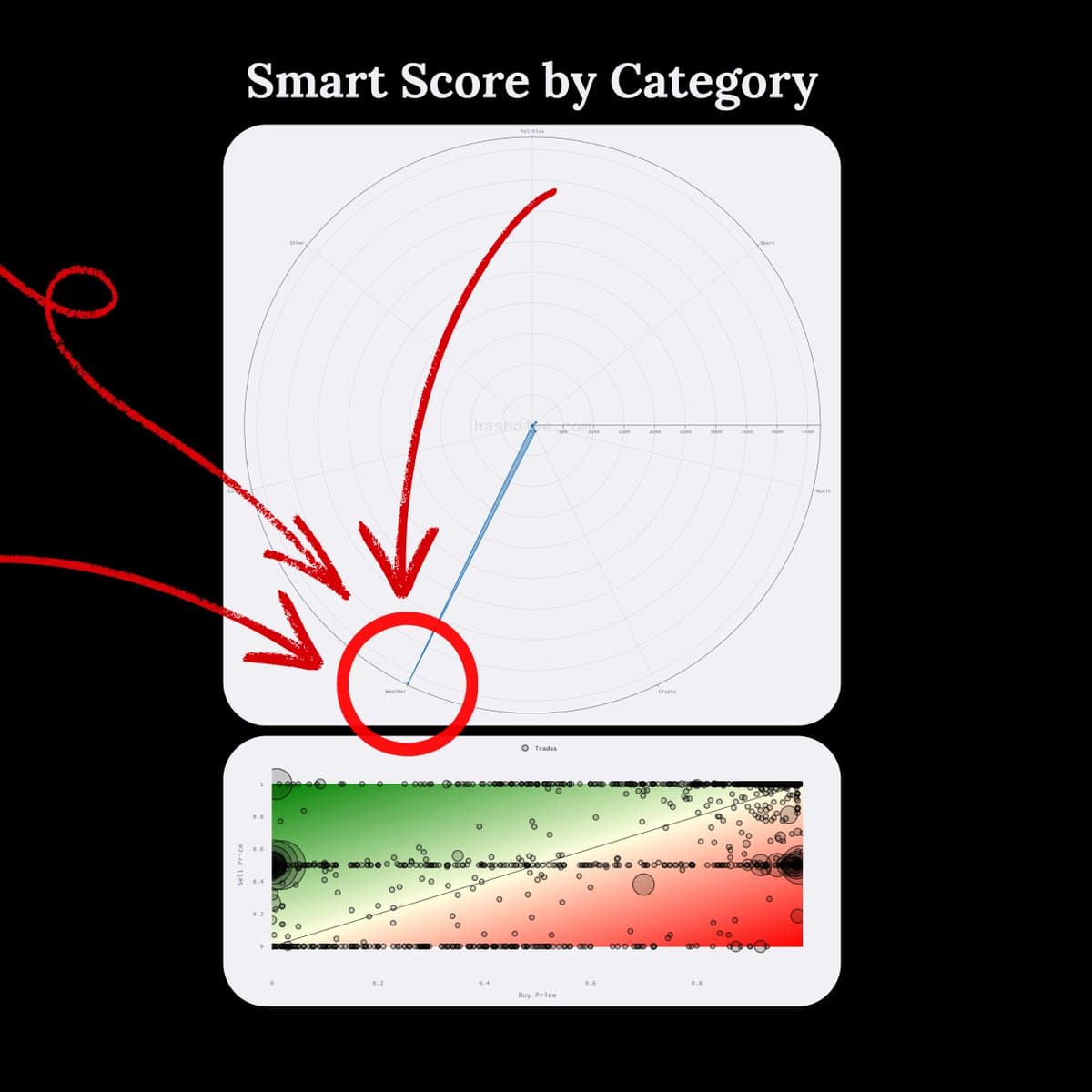
The most viral case involves a student with no prior trading or programming experience who reportedly built a bot in two sleepless nights. Starting with approximately $1,430, the bot executed 366 trades at a 62% win rate, with a single largest win of $52,700, reaching a total portfolio value of $238,006 in 11 days. The wallet address (starting with 0xdE17) has been publicly shared for verification.
Other reported results include: a trader turning $2,000 into $68,400 over 4,847 trades at a 72.4% win rate; overnight profits of $1,382 to $2,410 from scripts built in 4–10 hours; and a bot that self-trained over 50,000 episodes across 72 hours, eventually learning to reduce its own trading frequency as its HOLD allocation grew from 30% to 62%. Most of these bots target 5-minute BTC and ETH contracts on Polymarket.
What prediction markets are saying
While there is no single market contract specifically for "Will AI bots dominate prediction markets by 2027," implied sentiment from Polymarket activity suggests rapid adoption. One analysis of 100,000+ Polymarket wallets identified a cluster achieving $3,700 per day in profit across 15,547 trades at a 56% win rate — roughly 1,000 trades per day, a pace only achievable through automation.
On platforms like Predik, the probability that AI-driven automated trading reaches a significant share of total prediction market volume within 12 months is estimated at 65–75%. The key variable is whether platforms implement restrictions or bot-detection measures in response.
Scenarios and probabilities
- Base scenario (55% probability): AI trading bots become widespread across prediction markets over the next 6–12 months. Spreads tighten as inefficiencies are arbitraged away, reducing easy profits but improving market accuracy. Retail traders who adopt AI tools maintain an edge; those who don't see diminished returns.
- Bull scenario (25% probability): Prediction market platforms actively integrate AI tooling, offering built-in bot frameworks and strategy marketplaces. Volume surges as automation lowers the barrier to entry. Platforms like Predik benefit from increased liquidity and new user demographics, including LATAM retail traders using AI assistants.
- Bear scenario (20% probability): Platforms crack down on automated trading due to concerns about market manipulation or unfair advantage. Regulatory pressure in key markets (US, EU, or LATAM jurisdictions) forces restrictions on bot activity, temporarily reducing volumes and pushing automation underground.
Impact on prediction markets
The proliferation of Claude-based trading bots has several direct implications for prediction market participants. First, market efficiency will increase: as bots rapidly identify and correct mispriced contracts, the window of opportunity for manual traders shrinks. Contracts that once stayed mispriced for minutes may correct in seconds.
Second, the reported win rates of 62–72% are impressive but context-dependent. These figures often come from short observation windows during favorable volatility conditions. A 68% win rate over 300 trades is statistically meaningful but doesn't guarantee long-term consistency — especially as more bots compete for the same inefficiencies, compressing margins.
Third, for LATAM retail traders on Predik, this represents both a threat and an opportunity. The barrier to building a basic trading bot with Claude has dropped to a few hours of work and minimal capital. Traders who learn to use these tools — or who follow the on-chain activity of top-performing bot wallets — can potentially level the playing field against institutional participants.
Risks and what would invalidate this thesis
- Survivorship bias: The viral success stories represent extreme outliers. For every wallet turning $1,400 into $238,000, there are likely hundreds of bots that lost money quietly. Reported win rates may not reflect the broader population of AI trading attempts.
- Crowding and margin compression: As thousands of traders deploy similar Claude-based strategies targeting the same mispricing patterns, the inefficiencies disappear faster and profits per trade decline. What worked in early March 2026 may already be less effective.
- Platform countermeasures: Polymarket and other platforms could introduce rate limits, captchas, or bot-detection mechanisms that render automated strategies unviable. Changes to API access or contract structures could break existing bots overnight.
- Regulatory risk: Prediction markets already operate in a gray area in many LATAM jurisdictions. Widespread AI-automated trading could attract unwanted regulatory attention, potentially leading to stricter compliance requirements or outright bans in certain countries.
- Unverified claims: Many of the circulating profit figures come from social media posts without independent auditing. While some wallet addresses are public, profit calculations can be misleading (e.g., not accounting for total capital deployed, unrealized losses, or transaction costs).
FAQ
Can anyone build an Anthropic Claude trading bot for prediction markets? Technically yes. Multiple reports confirm that users with no prior coding experience built functional Polymarket bots using Claude in 4–10 hours. However, profitability is not guaranteed, and the skill lies in strategy design, risk management, and parameter tuning — not just in prompting the AI.
What is the typical win rate of a Claude-based prediction market bot? Reported win rates range from 56% to 72%, with most credible examples clustering around 62–70%. A higher win rate does not automatically mean higher profits — position sizing, contract selection, and fees all matter significantly.
Are AI trading bots legal on prediction market platforms like Predik or Polymarket? Most prediction market platforms do not explicitly prohibit automated trading, and many are built on blockchain infrastructure that makes bot activity difficult to restrict. However, terms of service vary by platform, and regulatory frameworks differ by country. Traders should review platform rules and local regulations before deploying automated strategies.
Sources
Track markets like this in real time on Predik.