Black Monday March 2026: Global Markets Crash as Japan Falls 6%, Bitcoin Whale Dumps $670M, and Prediction Markets Flash Recession Warning
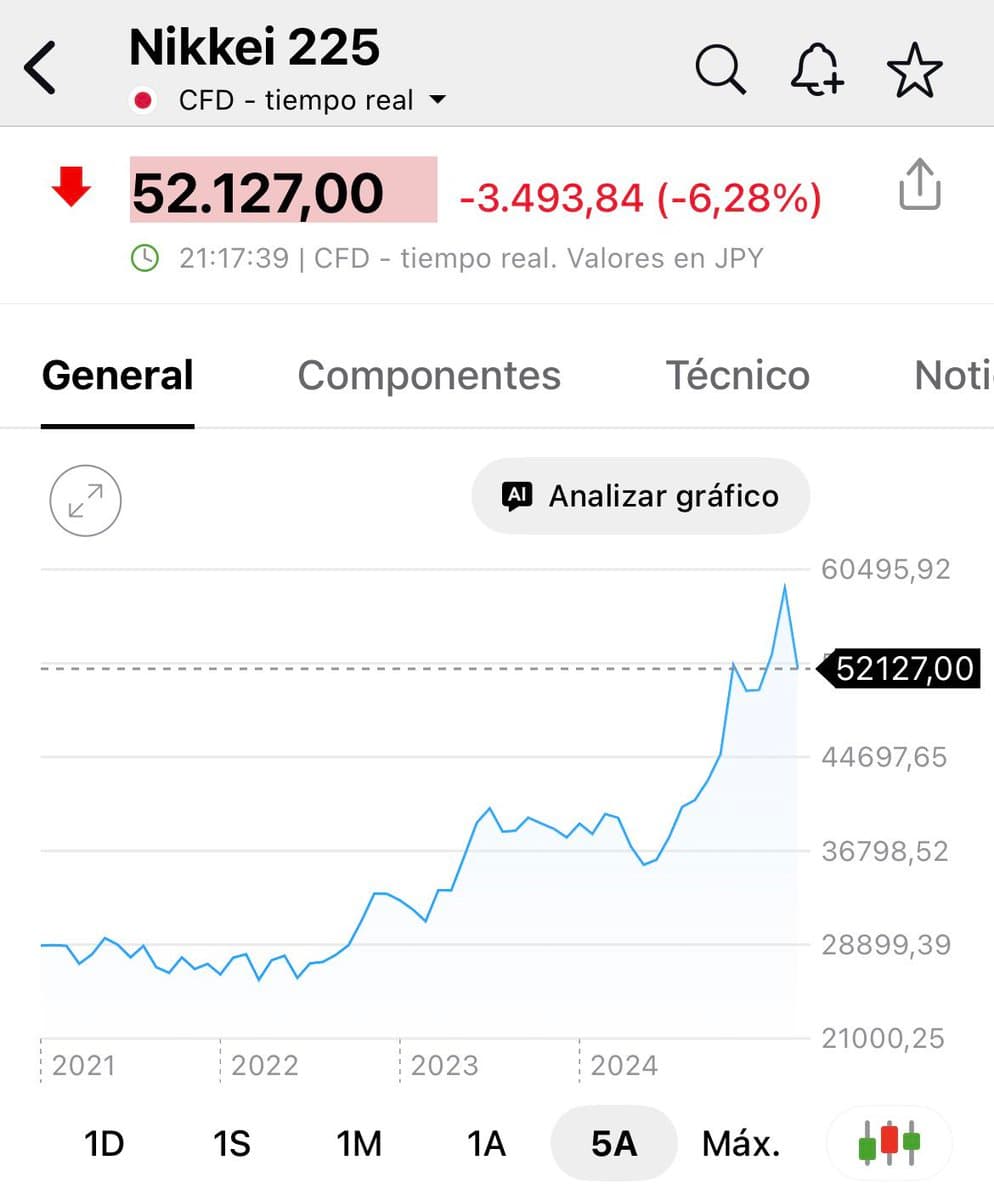
On March 9, 2026, global markets suffered a synchronized crash. Japan's Nikkei 225 plunged over 6%, South Korea suspended trading after an 8% drop, U.S. futures erased roughly $2 trillion, and a Satoshi-era Bitcoin whale liquidated 9,500 BTC worth $670 million. Prediction market recession contracts on Polymarket and Kalshi surged past 40%. Is this the start of a global bear market or a generational buying opportunity?
Black Monday March 2026: What the Global Market Crash Means for Prediction Markets
On March 9, 2026, global markets experienced a synchronized crash reminiscent of the worst selloffs in recent history. Japan's Nikkei 225 plunged over 6%, South Korea's KOSPI fell roughly 8% triggering a trading halt, and U.S. futures erased approximately $2 trillion in value — all while a Satoshi-era Bitcoin whale liquidated 9,500 BTC worth $670 million.
For LATAM traders and crypto-native investors, this event is more than headline noise. Prediction markets on Polymarket and Kalshi saw recession and prolonged downturn contracts surge, raising the critical question: are we witnessing the start of a global bear market or a generational buying opportunity?
What happened and why it matters
Monday, March 9, 2026, opened with carnage across Asian markets. Japan's Nikkei 225 dropped 6.28% at the open, while South Korea's stock exchange was forced to suspend trading after losses exceeded 8%. The selloff was driven by a sharp energy crisis — Brent crude surged above $100 per barrel and achieved rare parity with WTI for the first time, sending global bond yields higher and hammering risk assets across the board.
U.S. futures confirmed the contagion before Wall Street opened: Dow Jones futures fell 1.89%, S&P 500 dropped 1.86%, Nasdaq 100 lost 2.15%, and the small-cap Russell 2000 cratered 3.51%. The VIX fear index spiked 12% to 29.43, levels not seen since the 2020 pandemic crash.
In crypto markets, Bitcoin retreated 2.85% as a whale from the earliest era of the network — the Satoshi era — dumped 9,500 BTC ($670 million) in what appeared to be a calculated move ahead of the broader selloff. Reports also emerged of massive fund withdrawals from major institutions including Morgan Stanley, JPMorgan, and BlackRock, drawing comparisons to the liquidity freezes of 2008 and 2020.
Some market cycle analysts had flagged March 2–9 as a potential crash zone since January 2026, pointing to cyclical patterns similar to the 1987 crash, the 2008 Lehman Brothers collapse, and the COVID-19 market panic of March 2020. By the close of trading on Monday, however, markets partially recovered after statements from the U.S. administration regarding progress in geopolitical negotiations, suggesting the energy crisis trigger could ease. Hong Kong's Hang Seng Index, notably, only fell about 2.7% — significantly outperforming other Asian markets and hinting at regional divergence in risk exposure.
What prediction markets are saying about Black Monday 2026
On Polymarket, contracts betting on a U.S. recession in 2026 spiked sharply on March 9, with implied probabilities rising above 40% (estimated, based on pre-crash levels near 25%). Kalshi's recession contracts showed similar movement, reflecting traders pricing in the possibility that the energy-driven shock could tip the U.S. economy into contraction.
Contracts on prolonged market downturns — specifically the S&P 500 falling 20% or more from its highs — also saw increased activity and rising implied probabilities. On Predik, LATAM-focused traders are monitoring these contracts closely, as a global recession would disproportionately impact emerging market currencies and commodity-dependent economies across Latin America.
By mid-week (March 12), reports of a systemic liquidity crisis gained traction as massive institutional withdrawals continued. Analysts compared the dynamics to the early stages of the 2020 pandemic crash, when liquidity evaporated before central banks intervened.
Scenarios and probabilities
- Base scenario (50% estimated probability): Markets experience a sharp correction of 10–15% from recent highs but stabilize within 2–4 weeks as geopolitical tensions — particularly around Iran and oil supply — de-escalate. The energy crisis proves temporary, central banks signal readiness to intervene, and Bitcoin recovers above $72,000. Prediction market recession contracts settle back to the 30–35% range.
- Bull scenario (20% estimated probability): The crash proves to be a one-day liquidity event. Rapid diplomatic resolution brings oil below $90, triggering a V-shaped recovery across equities and crypto. Recession contracts on Polymarket fall back below 20%. This becomes a generational entry point, similar to the March 2020 bottom.
- Bear scenario (30% estimated probability): The energy crisis deepens, oil remains above $100 for weeks, and the systemic liquidity crunch intensifies. Institutional outflows accelerate, triggering forced selling and margin calls. The S&P 500 enters bear market territory (–20% from highs), Bitcoin retests $55,000, and U.S. recession probability on prediction markets crosses 60%. LATAM currencies face significant devaluation pressure.
Impact on prediction markets
Black Monday 2026 highlights how prediction markets have become real-time barometers of systemic risk. The speed at which recession contracts repriced on Polymarket and Kalshi — within hours of Asian markets opening — demonstrates that these platforms now rival traditional volatility indicators like the VIX as sentiment gauges.
For LATAM traders on Predik, the key insight lies in the spread between U.S.-centric recession contracts and emerging market risk. If prediction markets begin pricing in a global recession rather than a U.S.-only slowdown, expect contracts related to LATAM currencies (Mexican peso, Brazilian real, Argentine peso) and commodity prices to see significant volume increases.
However, traders should be cautious about interpretation. The partial recovery by Monday's close — driven by statements suggesting geopolitical de-escalation — shows how quickly catalysts can reverse market sentiment. Prediction market prices during peak panic often overshoot, creating opportunities for contrarian traders who can separate signal from noise. The fact that some media outlets reported markets "avoided a Black Monday" by end-of-day underscores this dynamic.
Risks and what would invalidate this thesis
- A rapid diplomatic resolution could collapse oil prices and render recession bets worthless within days, punishing traders who entered panic-driven positions at elevated implied probabilities.
- Central bank intervention — emergency rate cuts or liquidity injections — could short-circuit the selloff before it becomes truly systemic, making current prediction market probabilities overstated.
- The Satoshi-era whale BTC sale may have been an isolated event rather than a leading indicator. If no further large-scale crypto liquidations follow, Bitcoin could decouple from equity weakness as it did in prior cycles.
- Institutional withdrawal reports from major banks may be exaggerated or misinterpreted. Confirmation bias during crashes tends to amplify negative narratives beyond their actual magnitude.
- Regional divergence matters: Hong Kong's relatively mild 2.7% decline suggests the selloff may be more geopolitically concentrated than truly global, potentially limiting contagion to LATAM markets.
FAQ
What caused Black Monday on March 9, 2026? The crash was primarily triggered by a sharp energy crisis with Brent crude surging above $100 per barrel, geopolitical tensions involving Iran, and a cascade of selling across Asian markets (Japan –6.28%, South Korea –8%) that spread to U.S. futures and crypto markets.
How much did Bitcoin fall during the March 2026 crash? Bitcoin dropped approximately 2.85%. A Satoshi-era whale also sold 9,500 BTC ($670 million) shortly before the crash intensified, adding selling pressure. However, Bitcoin's decline was relatively moderate compared to equity markets.
What are prediction markets saying about a U.S. recession in 2026? As of mid-March 2026, recession probability contracts on Polymarket and Kalshi surged above an estimated 40%, up from roughly 25% before the crash. Systemic liquidity concerns and reports of institutional withdrawals from major banks have kept these probabilities elevated.
Sources
Track markets like this in real time on Predik.