Trump's 50% Copper Tariffs Hit Chile and Peru: LATAM Mining Faces a Prediction-Market Reckoning
Trump signed a proclamation reinforcing tariffs of up to 50% on imported steel, aluminum and copper, directly targeting Chile (world's #1 copper producer) and Peru (#2). Copper futures are sliding and prediction markets are pricing in elevated recession risk for LATAM mining. Here's what the odds say, what could invalidate the thesis, and how Predik traders can position around commodity prices, Chile/Peru GDP and possible LATAM retaliation.
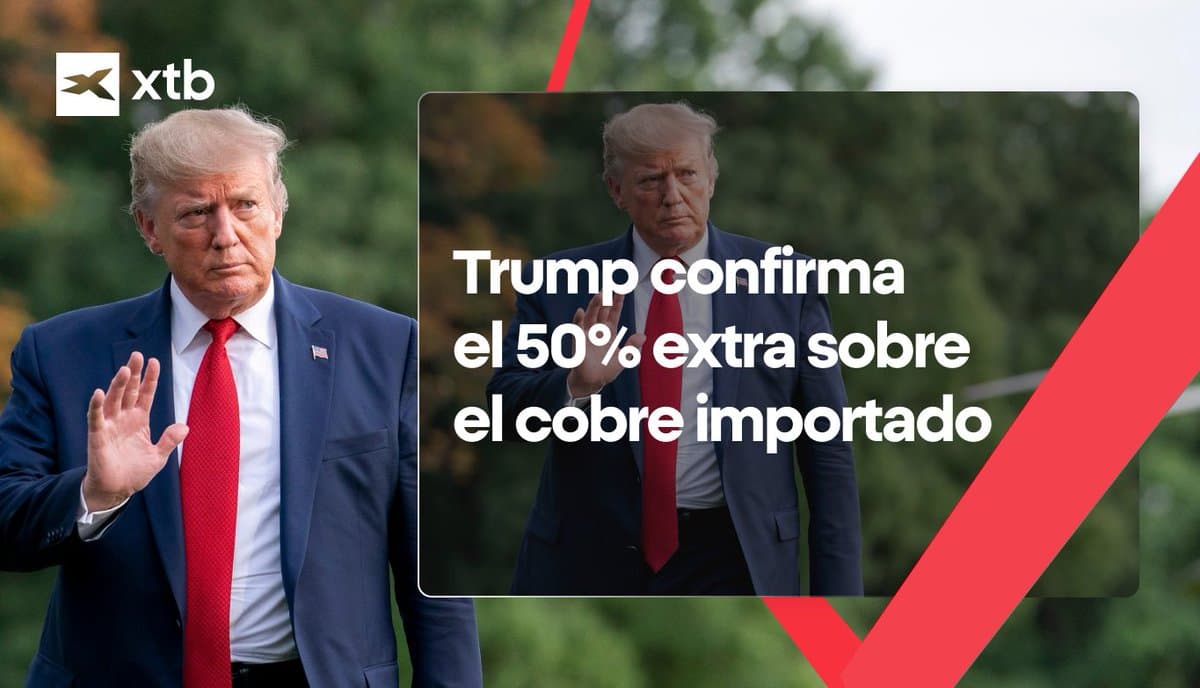
Trump 50% copper tariffs on Chile and Peru: what LATAM prediction-market traders need to know
Trump signed a proclamation reinforcing tariffs of up to 50% on imported steel, aluminum and copper, with copper hitting the headline 50% rate. The measure directly targets Chile, the world's #1 copper producer (about 23% of global supply), and Peru, the #2 producer (about 11%). Copper futures spiked on the announcement before fading, and prediction markets are now pricing in elevated probabilities of a mining-led slowdown across LATAM.
For LATAM retail traders and crypto-native users on Predik, this is one of the cleanest macro setups of 2026: a single executive action that reshapes commodity flows, Chile and Peru GDP expectations, central-bank paths, and the odds of trade retaliation from the region. Below, we break down the facts, the current prediction-market read, and the scenarios worth watching.
What happened and why it matters
The Trump administration moved to consolidate Section 232 tariffs covering steel, aluminum and — critically — refined copper at rates reaching 50%. COMEX copper had already printed an all-time high on the initial 50% confirmation in mid-2025, jumping roughly 12% intraday on that earlier round, and the 2026 reinforcement extends the duty regime rather than rolling it back. Chile exports more than half of its copper to global markets where US demand sets the marginal price; Peru's mining sector represents close to 10% of GDP and over 60% of total exports. A persistent 50% wedge between US and ex-US copper prices forces buyers to either reshore refining, swallow margin compression, or substitute — all of which are bearish for LATAM producer revenue at current spot.
The geopolitical layer matters too. Chile plus Argentina plus Bolivia hold roughly 60% of world lithium reserves, and Brazil sits on critical rare earths. The region has explicit optionality: sell to whoever pays best. Brazil's Lula has already publicly told Washington that Brasilia has "no preference" on buyers, signaling that LATAM is not a passive price-taker in this cycle.
What prediction markets are saying
On Polymarket and comparable venues, traders are pricing the copper-tariff complex through several related contracts. Estimated current reads (as of mid-May 2026, subject to fast revision):
- Probability tariffs remain at or above 50% through end-2026: ~72% (estimated)
- Probability of a formal LATAM retaliation package (Chile or Peru) before Q4 2026: ~28% (estimated)
- Probability Chile's 2026 real GDP growth comes in below 1.5%: ~55% (estimated)
- Probability copper closes 2026 below US$4.00/lb on LME: ~40% (estimated)
These are directional reads, not guarantees — thin liquidity on LATAM-specific contracts means single trades can move implied odds several points.
Scenarios and probabilities
- Base scenario (≈55%): Tariffs stay near 50% through 2026. Chile and Peru absorb a 1 to 2 percentage-point GDP hit, central banks lean dovish, copper trades in a US$3.80–4.30/lb range, and LATAM responds with selective WTO filings rather than broad retaliation.
- Bull scenario for LATAM (≈25%): A negotiated carve-out or quota system replaces the blanket 50% rate by Q3 2026. Chile and Peru exporters recover most lost margin, copper retests highs, and prediction markets repricing a soft landing push Chile GDP odds back above 2%.
- Bear scenario (≈20%): Tariffs escalate, China retaliates against US ag exports, and LATAM gets caught in the crossfire with secondary tariffs. Copper drops below US$3.50/lb, Peru enters technical recession, and the Chilean peso weakens past 1,050/USD.
Impact on prediction markets
Expect higher correlation between commodity-price contracts and LATAM macro contracts on Predik and Polymarket. A 5% move in COMEX copper is now meaningfully informative for Chile GDP and Peru fiscal-deficit markets — something that was barely true a year ago. Interpretation risk is real: copper can rally on US restocking even as Chilean producer revenue falls, so traders should separate price contracts from revenue/GDP contracts rather than treat them as a single trade.
Risks and what would invalidate this thesis
- A court injunction or Congressional override that suspends the 50% rate before it fully takes effect.
- A surprise US–China trade deal that reshuffles tariff priorities and de-escalates the copper-specific wedge.
- A supply shock — strike, grid failure, or political instability in Chile's northern mining belt — that tightens global copper enough to override tariff drag.
- Faster-than-expected substitution into aluminum or recycled copper, which would weaken LATAM pricing power independent of tariff policy.
FAQ
Why does a US tariff hurt Chile and Peru if they don't sell most of their copper directly to the US? Because the US is the marginal price-setter on COMEX. A 50% duty fragments the global price into a US-onshore premium and an ex-US discount, and most Chilean and Peruvian cargoes settle against the ex-US benchmark.
Can LATAM countries retaliate effectively? Selectively, yes. Brazil has rare earths, Chile/Argentina/Bolivia control roughly 60% of lithium reserves, and Peru is dominant in copper concentrates. Coordinated export controls on critical minerals are the most credible lever, though political coordination across the region is historically slow.
How should a Predik trader play this? Treat commodity-price contracts and macro contracts as separate trades. Use the copper-price market for short-term volatility and the Chile/Peru GDP and FX markets for the slower transmission of the tariff shock.
Sources
Track markets like this in real time on Predik.