NATO Article 5 Under Siege: What European Defense Fragmentation Means for Prediction Markets in 2026
NATO's Article 5 collective defense clause faces its greatest credibility crisis since the alliance's founding. With the US signaling a potential drawdown of troops in Europe, prediction markets are pricing in scenarios ranging from a hollowed-out Atlantic alliance to a full European rearmament push above 3% of GDP. Here's what LATAM traders need to know about the geopolitical shift reshaping commodities, oil, and capital flows.
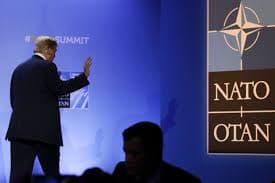
NATO Article 5 and European Defense: What Prediction Markets Are Pricing in 2026
NATO's Article 5 — the collective defense clause that has underpinned Western security since 1949 — is facing an unprecedented credibility crisis in early 2026. The US administration has signaled it could reduce troop presence in Europe to roughly 76,000, withhold intelligence-sharing with allies, and effectively decline to respond to an Article 5 activation. Prediction markets on Polymarket are seeing record volumes on contracts tied to Article 5 invocation before year-end and European military spending surpassing 3% of GDP.
For LATAM retail and crypto-native traders, this is not a distant European affair. A fracturing NATO alliance would send shockwaves through oil markets, commodity prices, and emerging market capital flows — making these prediction market contracts some of the most consequential geopolitical bets of the year.
What happened and why it matters
In late March and early April 2026, a convergence of events has thrust NATO's Article 5 into the global spotlight. The US administration has begun what analysts describe as a "quiet quitting" strategy: reducing American personnel in NATO command structures (starting with approximately 200 officers in early 2026), withholding full support for Article 5 commitments, and cutting funding contributions. This effectively hollows out US leadership within the alliance without a formal exit.
The backdrop is significant. US-Israeli strikes on Iran, which began on February 28, 2026, triggered Iranian retaliatory strikes against Gulf allies and Turkey. NATO intercepted some of these strikes and issued condemnations, but no formal invocation of Article 5 occurred — highlighting the clause's political complexity. Meanwhile, Russian bomber sorties over the Black Sea have been detected, escalating tensions in an already volatile theater.
Critically, the only time Article 5 has ever been invoked was by the United States itself after the September 11, 2001 attacks. Every NATO ally — including Ukraine — responded to that call, except Belarus and Russia. The irony is not lost on European leaders: the sole beneficiary of collective defense is now the nation most actively undermining it.
European confidence in Article 5 has cratered. Surveys and public discourse across the continent suggest that many Europeans no longer believe the collective defense guarantee would hold in practice. As one geopolitical analysis put it, without the American "big brother," Article 5 risks becoming "just a piece of paper."
What prediction markets are saying
On Polymarket, contracts related to NATO and European defense are attracting record trading volumes in Q1 2026. Two key contracts stand out:
- "Will NATO Article 5 be invoked before December 31, 2026?" — This contract has seen a surge in buying interest, with algorithmic trading models reportedly pushing probabilities upward. One AI-driven analysis flagged Russian bomber activity over the Black Sea as an escalation signal and shifted its confidence estimate to 0.72 (72%) for a probability increase in this contract. Current market-implied probability is estimated at 8–12%, up from under 5% at the start of the year.
- "Will European NATO members' average defense spending exceed 3% of GDP by 2027?" — This contract reflects the rearmament narrative gaining traction across the continent. Estimated market probability sits around 20–25%, driven by pledges from Germany, Poland, and the Baltic states.
Volume surges on these contracts correlate tightly with news cycles around US-NATO tensions and Middle East escalation events.
Scenarios and probabilities
- Base scenario (55% estimated probability): The US continues its "quiet quitting" approach — reducing NATO engagement without formally withdrawing. Europe accelerates defense spending but remains below the 3% GDP target through 2026. Article 5 is not invoked. Prediction market contracts on invocation settle at zero; defense spending contracts remain in a 15–25% probability range. Oil prices see moderate upward pressure ($85–95/barrel) due to geopolitical risk premium.
- Bull scenario (15% estimated probability): A direct security incident involving a NATO member (e.g., a provocation in the Baltics or a spillover strike hitting Turkey) forces a serious Article 5 discussion. Even without formal invocation, the political signaling triggers a massive European defense spending commitment above 3% GDP. Defense and aerospace stocks surge. Prediction market volumes explode, with Article 5 invocation contracts jumping to 25–35%.
- Bear scenario (30% estimated probability): The US effectively abandons its NATO security guarantees, and Europe fails to unify on a credible defense alternative. The alliance fragments, Turkey faces security threats without US backing, and geopolitical instability drives oil above $110/barrel. Capital flight from European assets toward US dollar and emerging market commodities benefits some LATAM economies but introduces severe volatility. Article 5 becomes politically defunct without ever being formally revoked.
Impact on prediction markets
The NATO Article 5 crisis represents a new class of geopolitical prediction market contracts — ones where the underlying event (collective defense invocation) has almost no historical precedent (only one instance in 75 years), making probability estimation exceptionally difficult. Traders should be aware that market-implied probabilities in this space are driven more by narrative momentum and algorithmic sentiment analysis than by traditional actuarial models.
For LATAM-focused traders, the key transmission mechanisms are clear: European instability drives capital toward dollar-denominated safe havens and commodity-exporting economies. Oil and gas markets respond directly to NATO-related headlines. Brazilian, Colombian, and Mexican energy exporters could see windfall revenues under escalation scenarios, while import-dependent economies in Central America and the Caribbean would face cost pressures.
Additionally, algorithmic and AI-driven trading is increasingly dominant in these contracts. Models are reportedly buying Article 5-adjacent contracts based on real-time military activity signals — such as bomber sorties, naval movements, and satellite imagery — creating short-term price spikes that can be either opportunities or traps for manual traders.
Risks and what would invalidate this thesis
- De-escalation in the Middle East: A ceasefire or diplomatic resolution between the US-Israel coalition and Iran would remove one of the primary catalysts for Article 5 discussions, likely deflating prediction market contract prices rapidly.
- US policy reversal: A shift in the US administration's stance — whether through congressional pressure, a new Secretary of Defense, or electoral considerations — could restore credibility to Article 5 overnight, collapsing bear scenario probabilities.
- European strategic autonomy breakthrough: If the EU successfully launches a credible independent defense framework (as France has long advocated), it could render Article 5 invocation less relevant while simultaneously boosting European defense spending contracts.
- Liquidity risk: Many of these geopolitical contracts on Polymarket still have relatively thin order books compared to election or crypto markets. Large trades can move prices disproportionately, creating false signals.
FAQ
How many times has NATO Article 5 been invoked? Exactly once — by the United States on September 12, 2001, following the 9/11 attacks. All NATO allies, including countries like Ukraine (a partner, not member), contributed to the subsequent operations in Afghanistan.
Can the US legally withdraw support for Article 5 without leaving NATO? Yes. The US president has the legal authority to reduce troop presence in Europe, order forces not to participate in NATO exercises, withhold intelligence-sharing with allies, and decline to respond to an Article 5 activation — all without formally exiting the alliance. This "quiet quitting" approach is what analysts believe is currently underway in 2026.
How does NATO instability affect LATAM markets? A weakened NATO increases global geopolitical risk premiums, which typically drives up oil and commodity prices (benefiting exporters like Brazil, Colombia, Mexico, and Venezuela) while strengthening the US dollar and increasing borrowing costs for emerging market economies. Capital flows can shift rapidly, creating both opportunities and risks for LATAM prediction market traders.
Sources
Track markets like this in real time on Predik.