Bitcoin at $62,000: Bear Market Predictions for 2026 and What Prediction Markets Actually Say
Bitcoin slid to $62,000 on June 5, 2026, triggering a wave of viral monthly roadmaps and giveaway scams. Here is why prediction markets like Polymarket and Kalshi offer a cleaner probabilistic signal than influencer threads, and how they are pricing Bitcoin's end-of-June range and the odds of a new all-time high before year-end.
Bitcoin at $62,000: Bear Market Predictions for 2026 and the Signal Beyond the Noise
Bitcoin dropped to roughly $62,000 on June 5, 2026, and social feeds immediately filled with viral monthly roadmaps predicting a bear market. The cleanest read on Bitcoin's 2026 path is not an influencer calendar — it is the probability-weighted pricing on prediction markets like Polymarket and Kalshi, which currently lean toward continued near-term weakness while keeping a new all-time high in 2026 an open but minority outcome.
This matters for LATAM retail and crypto-native traders because the same drawdown that wiped billions in paper value also unleashed a flood of "send 1 BTC, get 2 back" giveaway scams and confident-sounding month-by-month forecasts. Prediction markets translate that noise into a single number: the market-implied probability of an event. That is a more honest starting point than a thread promising it "called every top and bottom."
What happened and why it matters
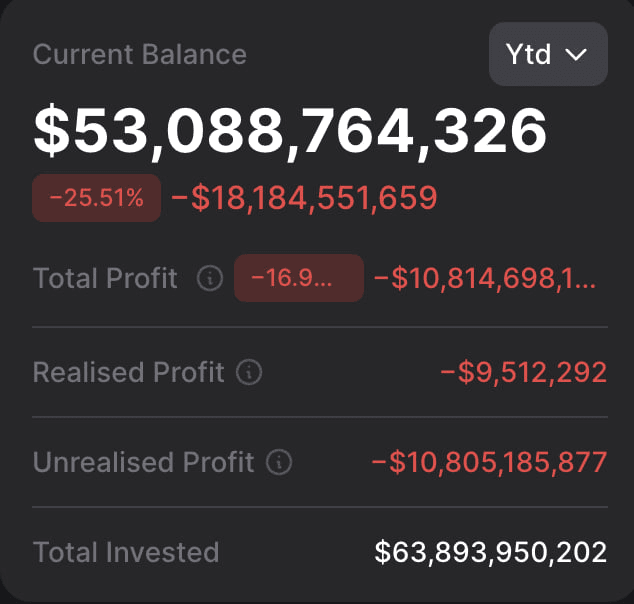
On June 5, 2026, Bitcoin traded near $62,000, extending a fast, vertical sell-off. Analysts circulating charts noted Bitcoin broke a long-running multi-year support trendline, a technically significant event that fueled bearish sentiment. Adding to the pressure, commentary spread that MicroStrategy-style corporate treasuries are deep underwater — one widely shared post claimed an unrealized loss of around $10.8 billion on a long-accumulated Bitcoin position. None of these claims are independently confirmed price targets; they are market color, and several conflict directly with one another.
The dominant viral format was the "2026 roadmap." One prominent forecast (Danny_Crypton) framed June as a bear trap, a July breakout, an August altcoin season, a new all-time high near $150,000 in September, then a bull trap, a liquidation cascade, and a bear market into December. Near-identical templates appeared from multiple accounts, some swapping the September target to $200,000. A competing camp (0xAralez and similar) projected a sweep to $60,000, a bear trap near $53,000, and a cycle bottom around $46,000. The contradictions are the point: the same week produced "$150K by September" and "$46K cycle low" with equal confidence.
What prediction markets are saying
On the bear market predictions for 2026 question, prediction markets price probability rather than narrative. Polymarket and Kalshi run continuous markets on Bitcoin price ranges and year-end thresholds. As of June 5, 2026, exact live odds shift by the minute, but the structure of these markets is what gives them an edge over influencer threads: they aggregate real money from many participants, and mispricings get arbitraged. Based on the current drawdown context, the estimated market-implied reads below are illustrative of how these venues frame the same questions the viral roadmaps answer with certainty.
Scenarios and probabilities
- Base scenario: Bitcoin chops between roughly $55,000 and $68,000 through end of June 2026 as the market digests the support break, with no clean new all-time high this summer (estimated 45-55%).
- Bull scenario: The $62,000 level holds as a local bottom, a July relief rally develops, and Bitcoin retests prior highs later in the year — the optimistic roadmap path (estimated 20-30%).
- Bear scenario: Support continues to fail, liquidity gets swept toward $54,000-$60,000, and a deeper capitulation toward the $46,000 cycle-low zone unfolds (estimated 25-35%).
Impact on prediction markets
Sharp drawdowns widen disagreement, and disagreement is exactly what prediction markets are built to price. During the June 5 sell-off, expect Bitcoin price-range markets on Polymarket and Kalshi to reprice quickly toward lower ranges, while longer-dated "new all-time high in 2026" markets compress as the runway shortens. The interpretation risk: a market-implied probability is not a forecast of certainty. A 30% chance of a new high means roughly one in three — it is information about uncertainty, not a promise. Thin markets can also be moved by a single large order, so check volume and liquidity before treating any number as gospel.
Risks and what would invalidate this thesis
- A macro shock or a major exchange or treasury liquidation event could push Bitcoin well below the $46,000 zone, invalidating every "bottom is in" call.
- A sudden ETF inflow surge or favorable policy headline could spark a violent V-shaped recovery, invalidating the bear-continuation base case.
- Low liquidity on specific prediction-market contracts can distort implied odds, making the "clean signal" temporarily unreliable until volume returns.
FAQ
Is Bitcoin in a bear market in 2026? As of June 5, 2026, Bitcoin near $62,000 after breaking long-term support reflects bearish momentum, but "bear market" is a label, not a confirmed regime — prediction markets price the probability of further downside rather than declaring it.
Are the viral monthly Bitcoin roadmaps reliable? No. Multiple accounts published contradictory month-by-month targets the same week (from a $150,000-$200,000 September high to a $46,000 cycle low), which is a signal of guesswork, not edge.
Why use Polymarket or Kalshi instead of influencer threads? These venues aggregate real-money bets into a single probability, which is harder to fake than a screenshot and self-corrects through arbitrage. Beware giveaway scams promising free Bitcoin during the dip — none are legitimate.
Sources
Track markets like this in real time on Predik.