White House Bans Officials From Prediction Market Bets During Iran War: A Regulatory Turning Point
The Wall Street Journal reports the White House warned officials last month against betting on futures and prediction platforms like Polymarket amid the war with Iran. The move targets government insider trading and could redraw the ethical limits of prediction markets and their ties to political power.
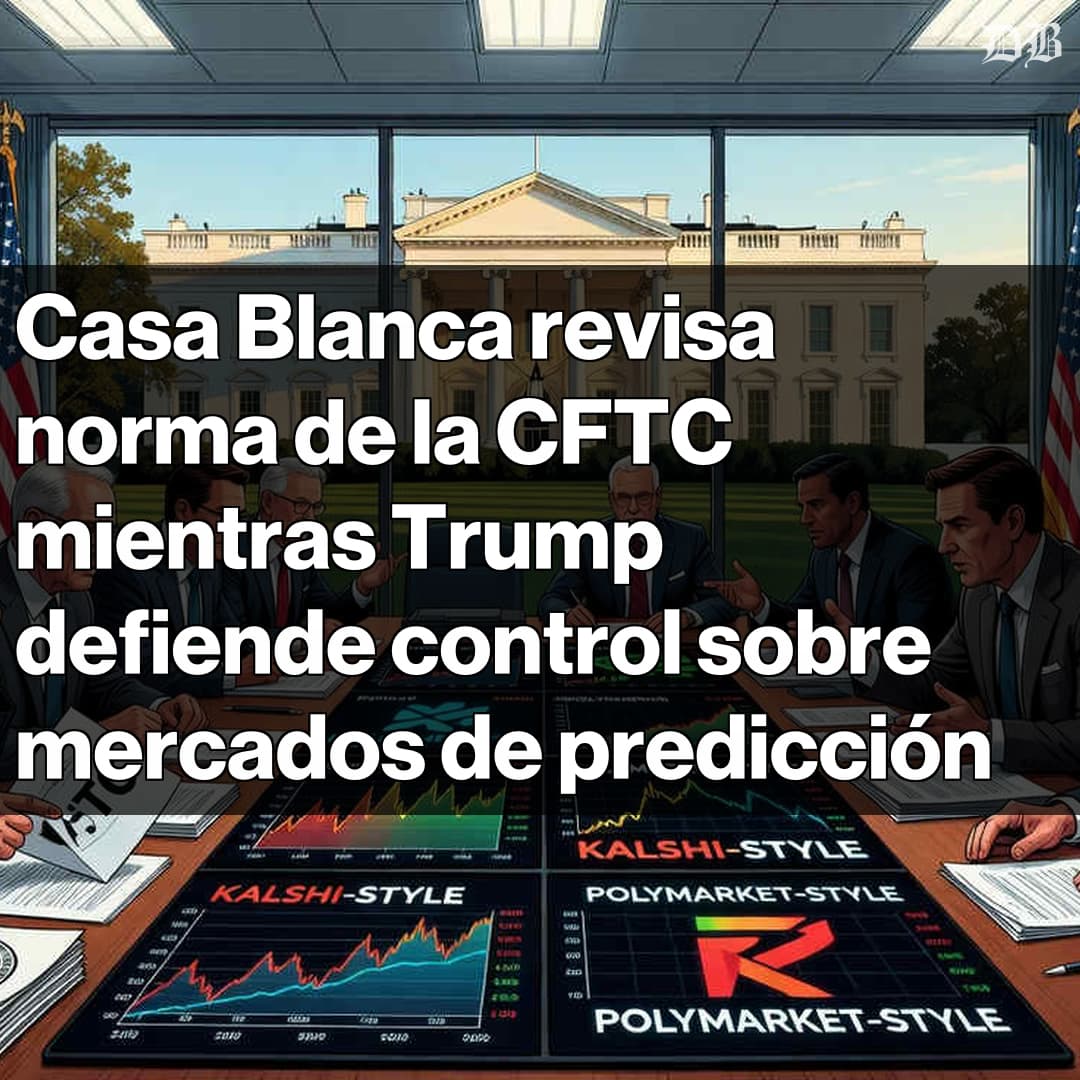
White House Bans Officials From Placing Prediction Market Bets During the Iran War
The White House warned its officials last month against placing bets on futures contracts and prediction platforms such as Polymarket, according to a Wall Street Journal report. The guidance, issued amid the war with Iran, is designed to prevent government insider trading on non-public policy information.
This matters for LATAM and crypto-native traders because it is one of the first explicit attempts by a major government to wall off its own staff from prediction markets. For traders on platforms like Polymarket, Kalshi, and Predik, official conduct rules can change how order flow behaves around geopolitical announcements — and set a regulatory precedent that ripples across the entire sector.
What happened and why it matters
In June 2026, the Wall Street Journal revealed that the White House cautioned officials roughly a month earlier against trading on futures markets and prediction platforms, including Polymarket, while the United States is engaged in armed conflict with Iran. The concern is direct: officials with access to non-public information about military or policy moves could profit by betting on event outcomes before those decisions are announced. The warning follows earlier controversy over suspicious trading activity that preceded several policy announcements, where unusually well-timed positions raised questions about leaked information. The guidance reframes prediction market bets as a potential ethics and insider-trading risk rather than harmless speculation.
What prediction markets are saying
As of June 4, 2026, there is no single dedicated market pricing the odds that the White House warning becomes a binding, formal regulation. Based on context, we estimate the market-implied probability of formal federal rules restricting government officials from prediction-market trading within the next 12 months at roughly 35-45% (estimated). Polymarket and similar venues continue to host active geopolitical markets on the Iran conflict, where volume tends to spike around news catalysts. Any odds cited here are estimates derived from the regulatory direction and historical precedent, not from a confirmed contract.
Scenarios and probabilities
- Base scenario: The warning remains informal internal guidance, reinforced by existing ethics rules but without new legislation. Estimated probability: 55%.
- Bull scenario: The episode accelerates clear, sensible federal rules that legitimize prediction markets while fencing off insiders, boosting mainstream trust and volume. Estimated probability: 25%.
- Bear scenario: Regulators overreact and pursue broad restrictions or enforcement that chills participation and pressures platforms operating in or serving US-adjacent users. Estimated probability: 20%.
Impact on prediction markets
Fact: rules limiting who can trade reduce one specific source of informed order flow — government insiders. Interpretation: removing that flow could make geopolitical market prices cleaner reflections of public information, but it may also reduce the sharp pre-announcement moves some traders try to read as signals. Traders should be cautious about treating sudden probability swings as confirmation of leaked decisions; under tighter conduct rules, such moves may reflect retail sentiment or speculation rather than insider knowledge. Separating the signal from the noise becomes harder, not easier.
Risks and what would invalidate this thesis
- The warning may be narrowly scoped or temporary, tied only to the Iran conflict, and quietly lapse once tensions ease — invalidating the idea of a lasting precedent.
- The Wall Street Journal account could be incomplete; the actual policy may be broader or narrower than reported, changing the regulatory read.
- Enforcement may prove impractical, leaving the guidance symbolic and with little real effect on market behavior or prices.
FAQ
Did the White House ban all prediction market betting? No. According to the WSJ report, it warned its own officials against betting on futures and prediction platforms; it did not ban prediction markets for the public.
Why focus on Polymarket and the Iran war? Polymarket hosts active geopolitical markets, and during an armed conflict officials may hold non-public information that could enable insider-style profits on those outcomes.
Does this affect traders in LATAM? Not directly, but it sets a regulatory and ethical precedent that could shape how prediction markets are governed and perceived globally, including in LATAM.
Sources
Track markets like this in real time on Predik.