China's ¥2.7 Trillion Stock Market Crash: How It Hits Crypto and LATAM Commodities in 2026
China's stock market lost ¥2.7 trillion (~$370 billion USD) in a single session on April 26, 2026, sending shockwaves through global markets. Bitcoin dropped sharply, LATAM commodity exporters face direct contagion risk, and prediction markets on Polymarket and Kalshi are repricing recession odds in real time. Here is what crypto-native and LATAM traders need to know about scenarios, probabilities, and positioning.
China's ¥2.7 Trillion Stock Market Crash: What It Means for Crypto and LATAM Prediction Markets
On April 26, 2026, approximately ¥2.7 trillion (~$370 billion USD) evaporated from Chinese equities in a single trading session—the largest single-day wipeout in over a decade. Bitcoin and major altcoins dropped immediately, while prediction markets on Polymarket and Kalshi began repricing China recession probabilities and LATAM commodity contagion risk sharply higher.
For LATAM-focused traders and crypto-native investors, this is not an abstract headline. China is the largest buyer of Chilean copper, Argentine soybeans, and Brazilian crude oil. When China's markets bleed at this scale, the contagion path to Latin American economies is direct and measurable—and prediction markets are already reflecting that reality.
What happened and why it matters
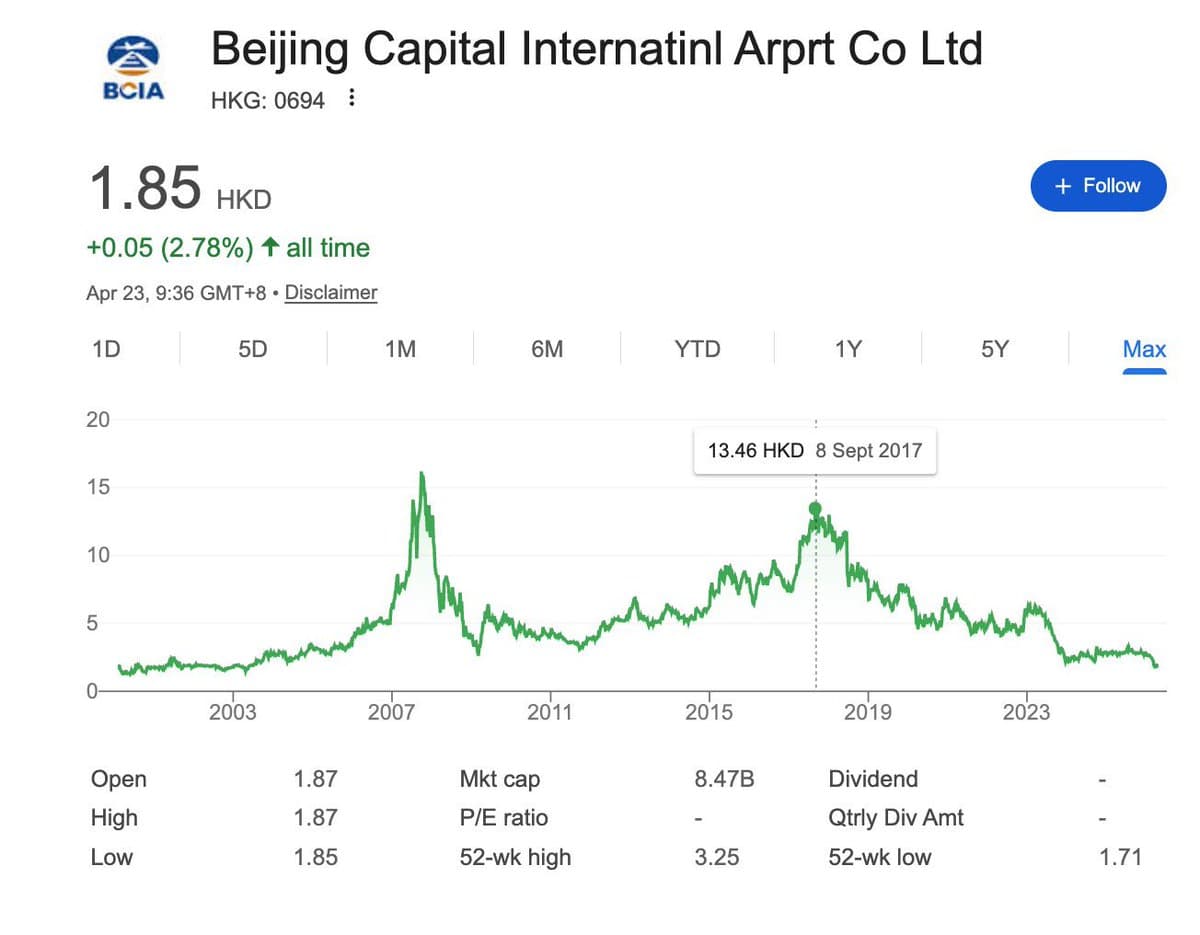
Chinese stock exchanges suffered a brutal sell-off on April 26, 2026, erasing roughly ¥2.7 trillion in market capitalization. The crash comes amid a cascade of troubling signals from Asia's largest economy: Beijing International Airport's stock has collapsed from ¥14.1 to ¥1.71—levels not seen since 2002—while international specialty shops at Shanghai Pudong Airport have shuttered en masse, signaling a severe contraction in both tourism and consumer spending.
The aviation sector tells a particularly grim story. Major Chinese airlines—Air China, China Eastern, and China Southern—are reporting massive losses despite high passenger loads, pointing to structural pricing collapse rather than a simple demand dip. Domestic retail is also fracturing: consumer-facing brands are experiencing sudden closures that have caught shoppers off guard, revealing a crisis that goes deeper than headline GDP figures suggest.
On the macro front, China has been aggressively dumping US Treasury holdings. In the past week alone, Beijing offloaded an estimated ¥1.21 trillion in US Treasuries following the collapse of Iran deal negotiations, compounding an earlier ¥1.15 trillion liquidation—reported as the largest single dump in 20 years. Meanwhile, China's gold reserves have climbed to $343 billion, signaling a deliberate and accelerating pivot away from dollar-denominated assets.
Adding to the pressure, China's central bank drained approximately ¥400 billion from markets in its second major liquidity withdrawal in years, only to inject a modest ¥14 billion this week—a move widely seen as grossly insufficient to stabilize sentiment. The contradiction between tightening and emergency micro-injections suggests Beijing is struggling to manage the crisis behind closed doors.
What prediction markets are saying about China's crash, crypto, and LATAM contagion
Prediction markets have moved fast. On Polymarket, contracts pricing a China recession in 2026 have surged to an estimated 42–48% probability, up from roughly 28% just two weeks ago. Kalshi markets tracking LATAM commodity price declines—specifically copper, soybeans, and crude oil—are showing elevated implied probabilities of 10%+ drops within 90 days.
Bitcoin-specific prediction contracts are also flashing warning signs. Historical data cited by market analysts shows that every major Chinese Treasury dump over the past decade has been followed by an approximately 21% decline in BTC price. With two massive Treasury liquidations in rapid succession (¥1.15 trillion and ¥1.21 trillion), the pattern is front of mind for crypto traders. Markets on Polymarket currently price a sub-$80,000 Bitcoin scenario at roughly 35% probability over the next 30 days (estimated based on current contract movement and volume trends).
For LATAM-specific contracts, prediction markets pricing commodity demand destruction from China are seeing their highest volume since the 2025 tariff escalation, when China raised tariffs on US goods to 125% and reshuffled global trade flows. The question now is whether LATAM exporters, who benefited from that reshuffling, will see the gains reversed by a broader Chinese demand collapse.
Scenarios and probabilities
- Base scenario (50% estimated probability): China's sell-off triggers a 2–4 week period of elevated volatility across emerging markets and crypto. Copper and soybean prices drop 8–12%. Bitcoin tests the $82,000–$85,000 range before stabilizing. LATAM currencies (BRL, CLP, ARS) weaken 3–6% against the dollar. Prediction market recession odds for China settle around 45%, and LATAM contagion contracts remain elevated but do not spike further.
- Bull scenario (20% estimated probability): Beijing intervenes aggressively with a large-scale stimulus package (¥2+ trillion injection), stabilizing equity markets within 10 days. Commodity prices recover quickly as China reaffirms import commitments. Crypto bounces on a risk-on rotation. Recession odds on prediction markets drop back below 30%, and LATAM commodity contracts normalize.
- Bear scenario (30% estimated probability): The crash accelerates into broader financial contagion. The yuan weakens past 7.50/USD, triggering capital flight and further Treasury liquidations. China's debt burden—long flagged by analysts who question official GDP figures—begins to unravel publicly. LATAM commodity exporters face sustained demand destruction: Chilean copper revenues fall 15%+, Argentine soy exports contract, Brazilian oil demand from China drops sharply. Bitcoin falls 20%+ as the historical China-dump correlation plays out. Prediction markets price China recession above 60%.
Impact on prediction markets
This crash is a textbook case of why prediction markets matter for real-time risk assessment. Traditional financial media is still debating whether China's slowdown is "manageable"—meanwhile, Polymarket and Kalshi contracts have already priced in significantly higher tail risk than consensus forecasts suggest.
For LATAM traders specifically, the key contracts to watch are those tied to copper prices (direct Chile exposure), soybean futures (Argentina exposure), and crude oil demand forecasts (Brazil exposure). These commodity-linked prediction markets tend to lag equity moves by 24–72 hours, creating a potential window for informed positioning before full repricing occurs.
Crypto-native traders should pay close attention to the China Treasury dump → BTC decline pattern. While correlation is not causation, the roughly 21% average BTC decline following major Chinese Treasury liquidations is a data point that prediction markets are actively incorporating into contract pricing. With two consecutive mega-dumps totaling over ¥2.3 trillion in Treasury sales, the statistical setup is as bearish as it gets for this particular signal.
One critical interpretation risk: prediction markets may be overreacting to the headline ¥2.7 trillion figure without fully accounting for Beijing's willingness to deploy massive intervention when systemic risk reaches critical levels. China has historically been willing to suspend trading, inject trillions, and impose administrative controls—responses that binary prediction contracts struggle to capture with proper nuance. Traders should factor in the possibility that a sudden policy reversal could snap contracts back violently.
Risks and what would invalidate this thesis
- Surprise Beijing stimulus: A coordinated intervention combining rate cuts, fiscal injection, and a market stabilization fund could reverse the sell-off within days, invalidating bearish commodity and crypto scenarios. China has done this before—most recently in 2024—and prediction markets would reprice within hours.
- US-China diplomatic breakthrough: Any resumption of trade negotiations or tariff de-escalation from the current 125% level on US goods would dramatically shift global sentiment and deflate recession odds across prediction platforms.
- LATAM demand diversification: If LATAM commodity exports prove more resilient than expected—perhaps because alternative buyers (India, Southeast Asia) absorb slack, or because strategic reserves buffer the shock—the contagion thesis weakens significantly.
- Crypto-specific catalyst override: A major Bitcoin ETF inflow event, favorable US regulatory development, or institutional accumulation cycle could override China-driven selling pressure, breaking the historical correlation pattern that prediction markets are currently pricing in.
- Data credibility discount: China's official economic data has faced persistent credibility questions from analysts and market participants. If the ¥2.7 trillion wipeout reflects a correction from artificially inflated valuations rather than genuine new economic deterioration, the real contagion risk to LATAM and crypto may be substantially overstated.
FAQ
How much did China's stock market lose on April 26, 2026? Approximately ¥2.7 trillion (~$370 billion USD) in market capitalization was erased in a single trading session, making it one of the largest single-day losses in Chinese market history.
How does China's stock crash affect Bitcoin and crypto? Historical data shows that major Chinese Treasury liquidations—like the ¥1.15 trillion and ¥1.21 trillion dumps in April 2026—have been followed by approximately 21% declines in Bitcoin. Prediction markets on Polymarket are currently pricing elevated odds of BTC dropping below $80,000 within 30 days.
Why should LATAM traders care about China's market crash? China is the top buyer of Chilean copper, Argentine soybeans, and Brazilian crude oil. A sustained Chinese economic slowdown directly reduces demand and prices for these commodities, impacting LATAM export revenues, currencies, and growth. Prediction markets on Kalshi and Polymarket are already repricing LATAM commodity contagion risk higher.
Sources
- Polymarket — Prediction market contracts on China recession and crypto price scenarios
- Kalshi — Regulated prediction markets for economic and commodity events
Track markets like this in real time on Predik.