Colombia vs Ecuador: 100% Tariffs Reshape Andean Trade in 2026
Colombia's escalation to 100% tariffs on Ecuadorian imports triggered an unprecedented Andean trade war in 2026. After CAN intervention, Ecuador agreed to lift reciprocal tariffs on June 1, but the political fallout continues. Prediction markets are pricing the probability of a full normalization, retaliation, and contagion to other Andean Community members.
Colombia's 100% Tariffs on Ecuador Imports: The Andean Trade War of 2026
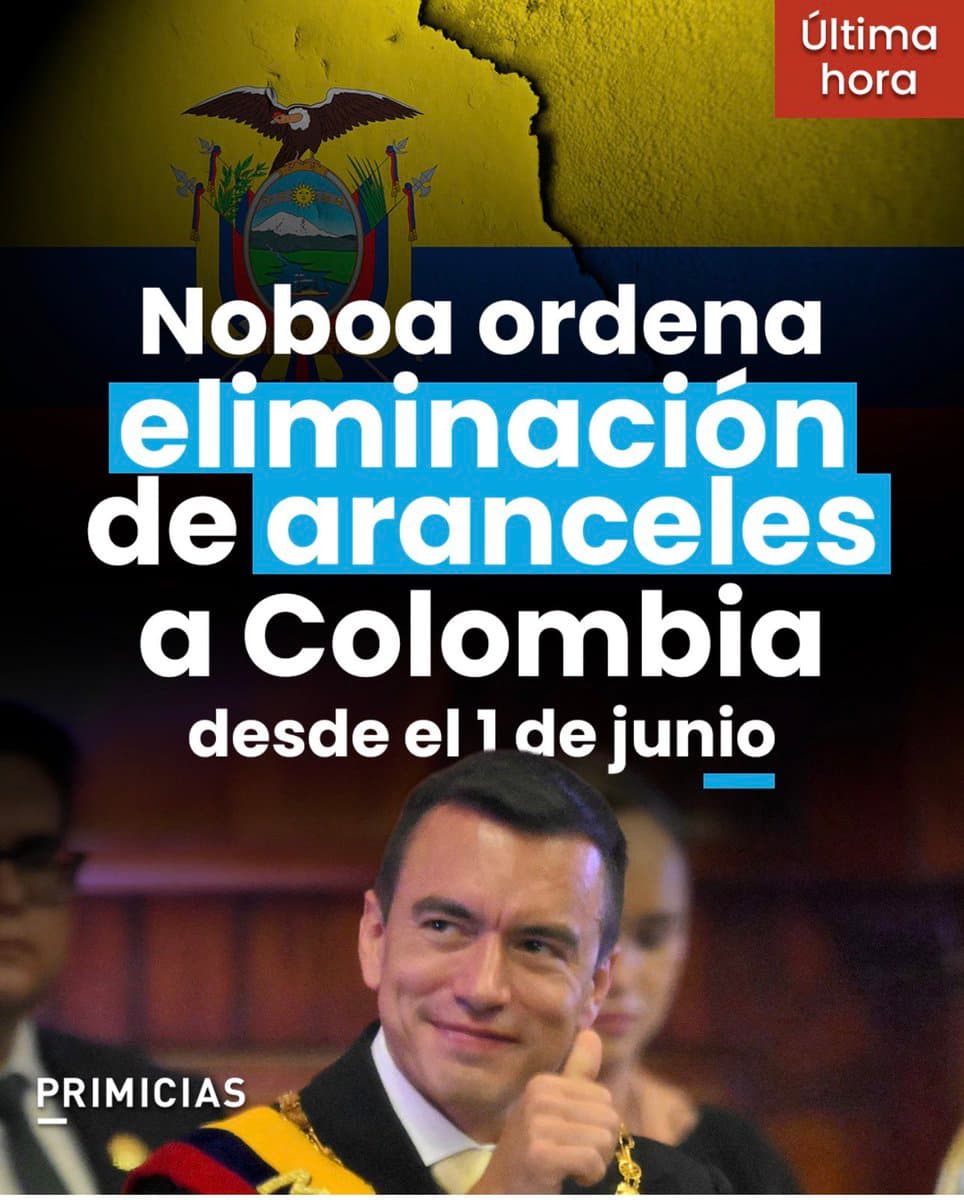
Colombia raised tariffs on Ecuadorian imports from 30% to 100% in early 2026, triggering the most aggressive protectionist escalation in the Andean region in decades. After Andean Community (CAN) intervention, Ecuador's President Daniel Noboa announced the elimination of reciprocal tariffs effective June 1, 2026, but Bogotá rejected the move as electoral interference.
For LATAM traders and prediction market participants, this episode is a live case study in how regional trade integration can unravel — and re-stitch — within weeks. The implications stretch far beyond bilateral flows: contagion risk, supply-chain rerouting, and political signaling all feed directly into market-priced probabilities.
What happened and why it matters
Colombia escalated import duties on Ecuadorian goods from 30% to 100%, the steepest unilateral tariff hike between two Andean Community members in modern history. Ecuador responded with reciprocal measures, paralyzing bilateral trade flows that historically exceed USD 2 billion annually. On May 30, 2026, the CAN's General Secretariat issued a binding resolution ordering both governments to withdraw the reciprocal tariffs, citing violations of the Cartagena Agreement. Ecuador's President Daniel Noboa announced on the same day that tariffs on Colombian products would be eliminated as of June 1, 2026. Colombia's foreign ministry rejected the framing of Noboa's announcement as a goodwill gesture, accusing Quito of "deliberate interference" in Colombia's ongoing electoral process. Ecuador had previously filed reconsideration and nullity appeals against the CAN resolution, signaling its initial intent to keep the tariffs in place.
What prediction markets are saying
Prediction markets on Polymarket and similar venues are pricing the probability of the tariff truce holding through Q3 2026 at roughly 58% (estimated), while odds of a full bilateral normalization by year-end sit near 42% (estimated). Contagion risk — defined as another CAN member (Peru, Bolivia) imposing reciprocal tariffs on either party within 90 days — is priced around 18% (estimated). Markets are also tracking the probability that the diplomatic spat materially affects Colombia's upcoming electoral cycle, with implied odds around 31% (estimated).
Scenarios and probabilities
- Base scenario: Ecuador formally removes tariffs on June 1, 2026, Colombia reciprocates within 10 days, and bilateral trade gradually normalizes through Q3. Probability: ~55% (estimated).
- Bull scenario: Both governments sign a reinforced Andean trade protocol by Q4 2026, restoring full free trade and locking in dispute-resolution mechanisms. Probability: ~20% (estimated).
- Bear scenario: Colombia delays compliance citing the electoral-interference accusation, triggering a fresh round of retaliation and dragging Peru or Bolivia into the dispute. Probability: ~25% (estimated).
Impact on prediction markets
Trade-policy shocks like this one create high-information environments where prediction-market odds move sharply on each diplomatic statement. Traders should distinguish between headline-driven volatility (e.g., presidential tweets, CAN press releases) and structural shifts (e.g., the actual repeal of the executive decrees). Mispricing tends to concentrate in the hours immediately after a binding regulatory action — such as the CAN resolution — when narratives lag the legal reality. Interpretation risk is elevated because the political framing in Quito and Bogotá diverges sharply from the underlying CAN compliance mechanism.
Risks and what would invalidate this thesis
- Colombia's executive branch could refuse to repeal its own decrees, citing sovereignty and electoral-interference concerns, which would nullify the truce.
- A change in government in either country during 2026 could re-open the dispute, especially if protectionist platforms gain traction.
- Supply-chain disruptions already booked at the border (perishables, manufactured goods) could harden into permanent rerouting toward Peru or Pacific Alliance partners, reducing the economic incentive to fully restore bilateral flows.
FAQ
Why did Colombia raise tariffs to 100% on Ecuadorian imports? The hike was a unilateral protectionist measure, the most aggressive in the Andean region in decades. Public justifications cited bilateral trade imbalances, but the timing also coincided with domestic political pressures.
Did Ecuador really agree to remove the tariffs? Yes. President Daniel Noboa announced on May 30, 2026 that Ecuador would eliminate tariffs on Colombian products effective June 1, 2026, in compliance with a binding CAN resolution.
Why did Colombia reject the announcement? Bogotá argues the removal was mandated by the CAN, not a voluntary gesture, and accused Quito of presenting it as goodwill to interfere with Colombia's ongoing electoral process.
Sources
- AlertaNews24 — original reporting on Colombia-Ecuador tariff escalation
- Polymarket — prediction markets on LATAM trade policy
Track markets like this in real time on Predik.