


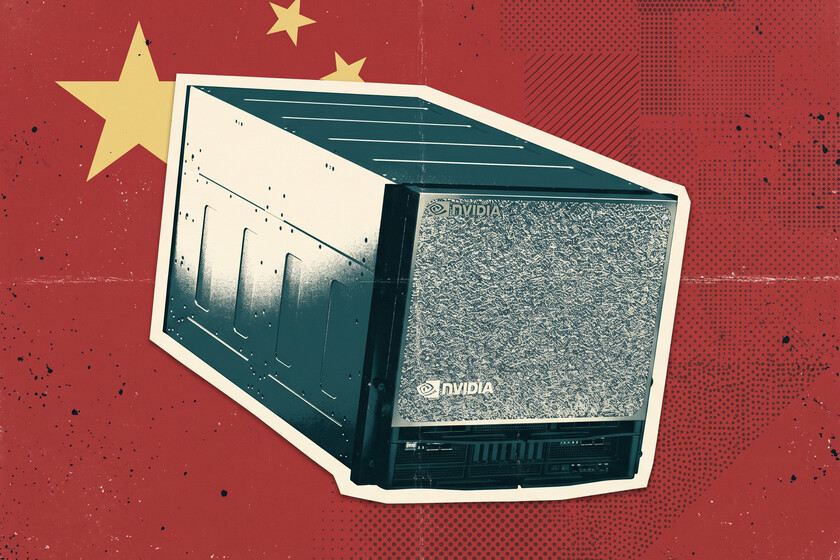
Nvidia chip export controls: what changes now that remote access is being closed
Nvidia chip export controls are entering a new phase: according to Xataka, citing Bloomberg, the US Department of Commerce published an interim rule on November 16 that requires a license to export advanced AI chips to data centers in Singapore, Malaysia, Thailand, Indonesia and Brazil. The goal is to stop Chinese companies from using remotely hardware they could not buy directly. The news coincides with Nvidia's quarterly earnings, with the call scheduled for 5 p.m. ET.
What happened and why it matters
For years, the ban on Nvidia's most advanced chips in China had a gap: the company could not sell that hardware there, but Chinese firms could still rent computing capacity in data centers in other countries. Commerce argues that cloud services let more and more players reach US AI systems, and it wants remote access governed by the same logic as physical access.
- Countries covered: Singapore, Malaysia, Thailand, Indonesia and Brazil, per Xataka; W.media would add South Africa and Norway.
- Mechanics: licenses will be reviewed case by case, and the rule is expected to take effect once it appears in the Federal Register, set for Thursday, November 19.
- Political context: Reuters, via X, says the Trump administration is closing these loopholes ahead of talks with China.
- Governance at Nvidia: Cointelegraph reported that the company set up new board oversight for national security and export controls.
- Ongoing probe: according to the case background, Commerce and Justice have been investigating Megaspeed, a Singapore-based data center firm, since 2024.
Xataka notes that a May 2026 analysis by the Carnegie Endowment concluded Washington had few tools to curb the use of data centers in that region. Xataka also ties the timing of the rule to Jensen Huang's departure as Nvidia's chief executive.
Scenarios and probabilities
The probabilities below are Predik's own analysis, not market data and not figures from any source.
- Gradual enforcement with selective licenses (about 50%): the rule takes effect, permits go to customers with solid safeguards and the impact on Nvidia is moderate.
- Later tightening (about 30%): the Senate moves forward with the remote access bill and controls extend to more cloud services.
- Dilution through weak execution (about 20%): doubts over who will enforce it and divisions inside the government limit its real effect.
Impact on prediction markets
There is no Predik market tied to this story, so there are no probability figures to cite. Still, the topic raises questions typical of prediction platforms: whether the rule is published on the expected date, whether the Senate passes the pending bill, or what Nvidia will say about China on its call. For LATAM traders the relevance is twofold: Brazil is among the countries subject to licensing, and Nvidia's moves tend to set the mood for tech equities and part of the AI-linked crypto universe.
- Watch for the Federal Register publication expected on November 19.
- Follow the tone of Nvidia's management on China during the earnings call.
- Always separate an administrative rule from an enacted law.
Risks and what would invalidate this thesis
Uncertainty is considerable. According to Xataka, citing Bloomberg, a former senior Commerce official called the rule very late and doubted who will be responsible for enforcing it. It is also unclear which specific chips are covered, what criteria licenses will follow and how chips already installed will be treated.
- Nvidia and its customers: DiarioBitcoin, citing CNBC and anonymous sources, says Nvidia warned of possible legal exposure if the pending Senate bill advances, and that for now it would not serve customers who rent more than half of their GPUs to Chinese firms. The Financial Times described a slightly different threshold, with at least 51% of services going to non-Chinese clients. Neither figure is officially confirmed.
- Political pressure: per CNBC, Treasury Secretary Scott Bessent called for a "dramatic change" at the company.
- What would invalidate the thesis: a delay in the Federal Register, broadly granted licenses or a deal with China that softens the framework.
According to DiarioBitcoin, neither Nvidia nor Commerce's export control office responded to CNBC's request for comment, so none of this should be treated as settled. This is not financial advice.
FAQ
What exactly does the new rule prohibit? It is not a blanket ban: it requires a license, assessed case by case, to export advanced AI chips to data centers in the listed countries.
Is it already in force? According to Xataka, it is expected to be once it is published in the Federal Register, scheduled for November 19.
Does it affect Latin America? Yes, directly in the case of Brazil, which Xataka lists among the countries subject to licensing.
Is there a prediction market on this? Not at the moment: Predik has no market tied to this story.
Sources
- Xataka, November 17, 2026
- Reuters, November 17, 2026
- DiarioBitcoin, November 17, 2026
- Cointelegraph, November 17, 2026
Track markets like this in real time on Predik.