Crypto Decoupling From Traditional Markets in 2026: Is Bitcoin's Parabolic Rally the New Safe Haven?
A striking divergence is forming across global markets in March 2026: stocks, gold, and silver are falling while cryptocurrencies are surging. Analysts point to structural shifts in price formation and weekly chart patterns that reinforce a crypto decoupling thesis. Prediction markets are now pricing whether this divergence is sustainable or temporary — a structural change that could redefine Bitcoin's role as an alternative safe haven asset.
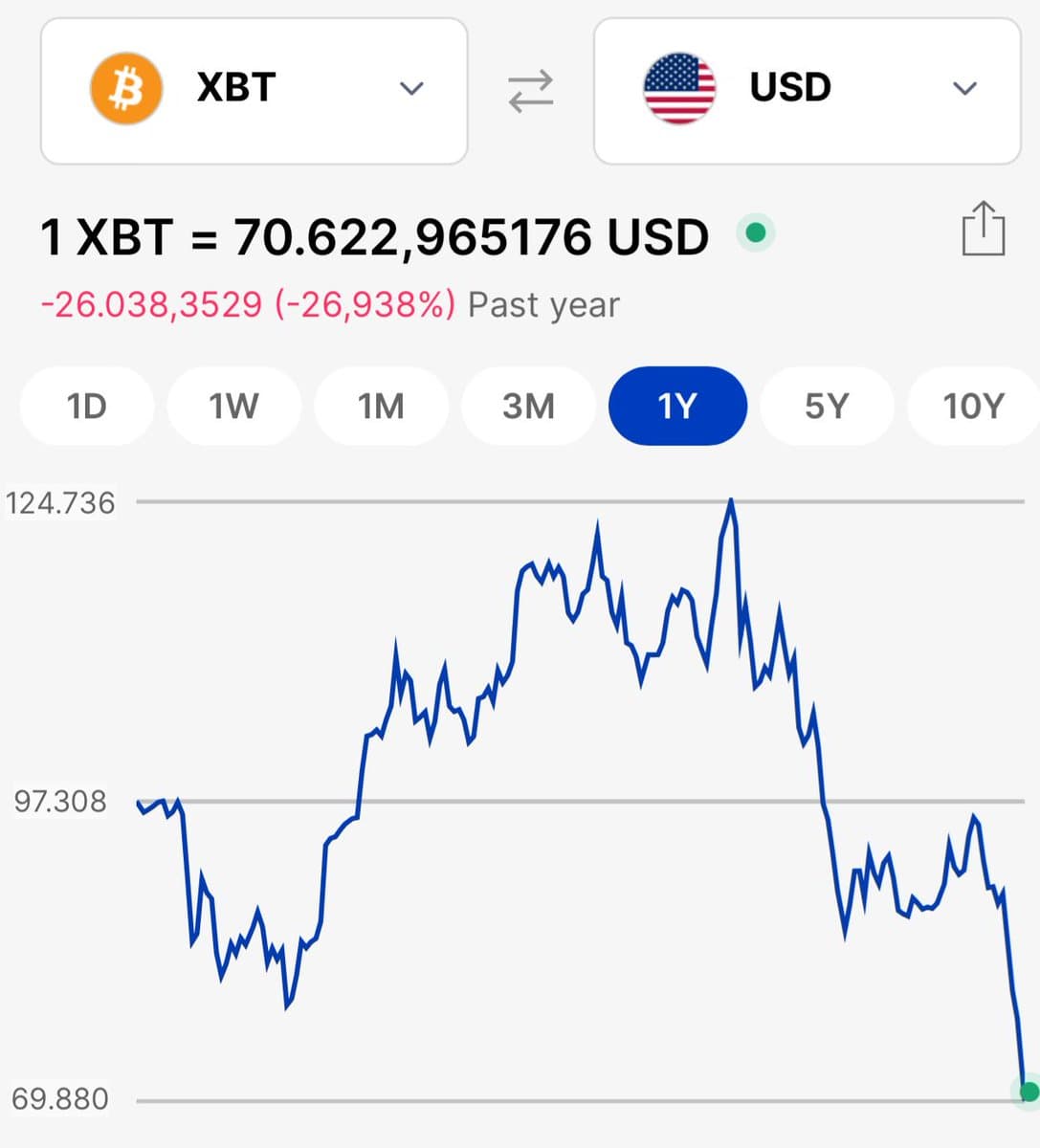
Crypto Decoupling From Traditional Markets in 2026: What the Data Shows
In March 2026, cryptocurrencies are diverging sharply from traditional assets. While equities, gold, and silver decline, Bitcoin and the broader crypto market are climbing — a pattern analysts call the crypto decoupling from traditional markets in 2026. This divergence is not just a short-term anomaly; it may signal a structural shift in how digital assets behave during periods of macroeconomic stress.
For LATAM retail traders and crypto-native investors, this matters enormously. If the decoupling holds, it would challenge the long-standing narrative that Bitcoin simply moves in lockstep with risk assets. Prediction markets are actively pricing this scenario, creating new opportunities for traders who understand the dynamics at play.
What happened and why it matters
The sequence of events leading to the current divergence has been dramatic. In late January 2026, gold crashed 16% and silver plunged 38% in less than 24 hours, wiping out an estimated $15 trillion in market value — roughly equivalent to half the GDP of the United States. The S&P 500 has also been under sustained pressure, with multiple sell-offs tied to geopolitical uncertainty and renewed pandemic fears after China reported a new coronavirus with pandemic potential.
Yet while traditional safe havens and equities were bleeding, crypto told a different story. After a brutal bear market phase that saw $170 billion evaporated from crypto market capitalization in a single 24-hour period in late 2025, the market has staged a dramatic reversal. Analysts who track weekly chart patterns have identified specific technical formations reinforcing the thesis that crypto is entering a parabolic phase — decoupled from stocks, gold, and silver simultaneously.
Earlier in 2025, the three asset classes moved more or less in tandem. By mid-2025, annual returns showed silver at +36%, gold at +30%, and Bitcoin at +27% — all rising together as hedges against fiat currency devaluation. Gold even broke its all-time high, reaching $3,660 per ounce in September 2025. But the correlation has since broken down in a way that veteran market observers describe as unprecedented.
The structural explanation is compelling: Bitcoin's price formation has fundamentally changed. Where price was once driven primarily by retail sentiment and on-chain activity, it is now increasingly shaped by institutional flows, options market mechanics, and ETF dynamics. A 122-day lateralization period in late 2025 — where Bitcoin was essentially trapped between $85K and $90K by options market positioning — demonstrated how derivatives markets now dominate price action. When that compression finally released, the energy moved crypto independently of other asset classes.
What prediction markets are saying about crypto decoupling from traditional markets in 2026
Prediction markets on platforms like Polymarket and Predik are beginning to reflect this divergence thesis. Markets pricing whether Bitcoin will outperform the S&P 500 over the next 90 days have shifted notably, with implied probabilities rising above 65% (estimated) in favor of Bitcoin outperformance. Separate markets on whether Bitcoin will reach new all-time highs before Q3 2026 are trading at approximately 55-60% probability.
More interestingly, markets tracking whether crypto will maintain its decoupling from gold for 60+ consecutive days have emerged, with early pricing suggesting a 40-45% probability of sustained divergence. This is significant because historically, crypto and gold have re-correlated within 30-40 days of any divergence. Capital is also reportedly starting to rotate from Bitcoin into Ethereum and altcoins, with early signs of an altseason developing — a pattern that typically signals growing confidence in the broader crypto cycle.
One major institutional voice has added fuel to the narrative: the CEO of Pantera Capital publicly suggested that the United States could sell gold reserves and acquire up to $600 billion in Bitcoin, framing it as a strategic reserve pivot. While speculative, prediction markets have priced this scenario at roughly 8-12% probability within 2026.
Scenarios and probabilities
- Base scenario (50% probability): The crypto decoupling persists for 2-3 months as institutional capital rotates from traditional safe havens into digital assets. Bitcoin breaks above previous resistance levels but the divergence gradually narrows as macro conditions stabilize. Altcoins outperform Bitcoin in the short term as capital rotates through the ecosystem.
- Bull scenario (25% probability): The decoupling marks a structural regime change. Bitcoin is increasingly treated as a standalone asset class, decoupled from both equities and commodities. A parabolic rally carries BTC to new all-time highs, and prediction markets pricing sustained divergence move above 70%. Institutional announcements (sovereign purchases, new ETF inflows) reinforce the narrative.
- Bear scenario (25% probability): The divergence proves temporary. A macro shock — such as a credit event, escalating pandemic fears, or aggressive central bank tightening — forces a correlated selloff across all asset classes including crypto. The decoupling narrative collapses, and Bitcoin re-correlates with the S&P 500 within 30 days. Markets pricing divergence crash below 20%.
Impact on prediction markets
The crypto decoupling from traditional markets in 2026 is creating a rich set of tradeable opportunities on prediction platforms. Traders who recognized the divergence early have been able to take positions on Bitcoin outperformance, sustained decoupling duration, and specific price targets — all of which have moved significantly in recent weeks.
However, interpretation risks are real. The fact that crypto rose while gold and silver crashed does not automatically mean the decoupling is structural. It could reflect different liquidity dynamics, different investor bases, or simply different timing in the same macro cycle. Prediction market traders should distinguish between correlation breakdown (a statistical observation) and regime change (a structural thesis). The former happens regularly and reverts; the latter is rare but transformative.
For LATAM traders specifically, the divergence has an additional dimension: local currencies under pressure from USD strength mean that crypto's rise in dollar terms translates into even larger gains in local currency terms. This amplifies both opportunity and risk.
Risks and what would invalidate this thesis
- Liquidity crunch: A global credit event or banking stress could force institutional investors to liquidate all positions including crypto, re-establishing correlation across all asset classes within days.
- Regulatory shock: Unexpected crypto regulation in major markets (US, EU, or key LATAM economies) could undermine the institutional adoption narrative that underpins the decoupling thesis.
- Options market trap: Given how derivatives now dominate Bitcoin price formation, a large options expiry or a coordinated market maker repositioning could create a violent reversal, similar to the bull trap observed when BTC moved from $123K to $126K in late 2025 before reversing sharply.
- Pandemic escalation: If the new coronavirus reported by China develops into a full-scale pandemic, all markets — including crypto — could face indiscriminate selling as investors rush to cash, as was seen in March 2020.
- Gold/silver recovery: If precious metals rebound quickly from their January crash, capital could rotate back out of crypto, collapsing the divergence narrative.
FAQ
What is the crypto decoupling from traditional markets in 2026? It refers to the observed divergence where Bitcoin and other cryptocurrencies are rising while stocks (S&P 500), gold, and silver are falling — breaking the historical correlation between these asset classes that held through most of 2025.
Is Bitcoin becoming a safe haven asset like gold? The current data suggests Bitcoin is behaving independently rather than as a direct gold replacement. While gold crashed 16% and silver fell 38% in a single day in late January 2026, Bitcoin held its ground and subsequently rallied. However, whether this represents a permanent shift or a temporary divergence remains an open question — prediction markets currently price sustained decoupling at roughly 40-45%.
How can LATAM traders position for this divergence? Prediction markets on platforms like Predik offer direct exposure to decoupling outcomes — traders can take positions on whether Bitcoin outperforms the S&P 500, whether the divergence sustains beyond 60 days, or whether specific price targets are reached. These markets allow traders to express a view on the structural thesis without needing to hold the underlying asset.
Sources
- Polymarket — Prediction Markets
- Market analysis by @markchadwickx on X
- Technical analysis by @CdeCriptoz on X
Track markets like this in real time on Predik.