US Housing Crisis Deepens: What a 17% Sales Crash Means for Prediction Markets and LATAM in 2026
New home sales in the United States plunged 17.6% month-over-month in January 2026—the worst January drop in 13 years. Prediction markets now price U.S. recession odds near 40%, with direct consequences for LATAM remittances, commodity demand, and crypto markets watching for a Fed pivot.
US Housing Crisis and Recession Risk: What Prediction Markets Are Pricing in 2026
New home sales in the United States plunged 17.6% month-over-month in January 2026—the worst January drop in 13 years—signaling that the housing market is cracking under the weight of elevated interest rates. Prediction markets have responded by pushing U.S. recession probabilities to their highest levels since mid-2023, with direct consequences for LATAM economies dependent on remittances and commodity exports.
For traders on prediction platforms like Polymarket and Predik, this is not just a U.S. domestic story. A full-blown American recession would ripple through Central America (where remittances account for up to 25% of GDP), pressure commodity demand across South America, and potentially trigger an emergency Fed rate-cutting cycle—a scenario that historically sends Bitcoin and risk assets surging.
What happened and why it matters
The U.S. Census Bureau reported that new home sales fell 17.6% in January 2026 compared to December 2025, marking the steepest monthly decline for the month of January since 2013. The data arrived amid a broader slowdown in housing activity: mortgage rates remain above 6.5%, inventory is rising in key Sun Belt markets, and builder confidence has dropped to a six-month low.
Adding to the stress on U.S. housing, fires in Los Angeles County displaced over 200,000 people according to a recent University of California study, creating localized supply shocks while broader affordability remains a crisis. Meanwhile, geopolitical tensions between the United States and Iran have rattled financial markets globally—Mexico's pension system (Afores) reported a historic loss of 417 billion pesos (approximately $23 billion) in March 2026 alone, largely attributed to international market volatility stemming from the U.S.-Iran naval standoff.
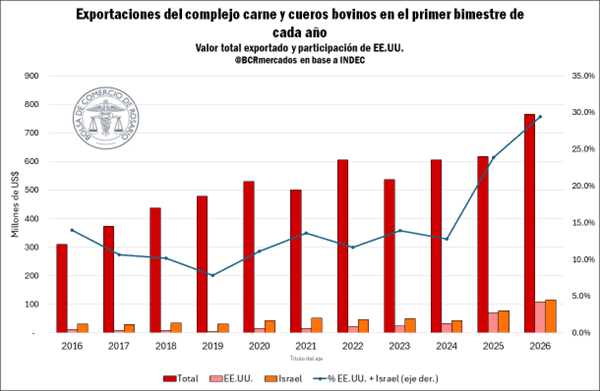
The housing slowdown is not isolated. It sits within a macro environment where the Federal Reserve has kept rates elevated to combat persistent inflation, even as labor market cracks begin to appear. For LATAM, a U.S. recession would mean fewer dollars flowing south: remittances to Central America and Mexico—which hit record levels in 2024 and 2025—would face their first meaningful contraction in years. Argentina's beef export sector, which posted a record $764.3 million in the first two months of 2026 with the U.S. accounting for a significant share of shipments, would also feel the demand squeeze from an American slowdown.
What prediction markets are saying
On Polymarket, the probability of a U.S. recession beginning in 2026 has climbed to approximately 38–42%, up from around 25% at the start of the year. Markets pricing Fed emergency rate cuts before September 2026 have also surged, with implied probabilities near 30%. Some market participants are pushing back, arguing that structural undersupply in U.S. housing will prevent a full-scale crash despite the sharp sales downturn—a view echoed by several real estate analysts who maintain that no housing crash is expected in 2026.
On Predik, related markets tracking LATAM currency movements and remittance flows are showing elevated uncertainty, reflecting traders' awareness that a U.S. slowdown transmits rapidly to the region through financial, trade, and migration channels. The Mexican peso, closely watched as an emerging-market bellwether, remains under pressure as markets digest both U.S. housing weakness and the ongoing geopolitical volatility.
Scenarios and probabilities
- Base scenario (50% estimated probability): Housing sales stabilize in Q2 2026 as the Fed signals rate cuts by late summer. The U.S. avoids a technical recession but growth slows to 0.5–1.0%. LATAM remittances dip 3–5% but recover by year-end. Bitcoin trades sideways between $55,000 and $70,000 awaiting clearer Fed signals.
- Bull scenario (20% estimated probability): The Fed pivots aggressively with 100+ basis points of cuts by Q3 2026, citing housing and employment weakness. Risk assets rally sharply—Bitcoin pushes above $90,000 on liquidity expectations. LATAM currencies appreciate on dollar weakness and capital flows rotate toward emerging markets.
- Bear scenario (30% estimated probability): Housing deterioration accelerates through summer, triggering construction layoffs and a consumer confidence spiral. The U.S. enters recession by Q3 2026. Remittances to Central America drop 10–15%, commodity prices fall, and LATAM currencies face significant pressure. Mexico's Afores absorb further losses on top of the 417 billion peso drawdown already recorded. Bitcoin initially drops with risk assets before recovering on monetary stimulus expectations.
Impact on prediction markets
The housing data has already moved prediction market probabilities meaningfully. Traders should watch for two key dynamics: first, the tendency for recession markets to become self-reinforcing as rising probabilities attract media attention and shift consumer behavior; second, the gap between "recession probability" markets and "Fed rate cut timing" markets, which can create arbitrage opportunities when they diverge.
For crypto-native traders, the critical variable is not whether a recession happens, but when the Fed responds. Bitcoin's strongest historical rallies have followed monetary policy pivots—not economic recoveries. A scenario where economic data deteriorates fast enough to force emergency cuts could be paradoxically bullish for crypto even as traditional markets suffer.
LATAM-focused prediction markets deserve particular attention. The correlation between U.S. housing health and Mexican peso stability is well-documented, and with U.S. midterm elections approaching in November 2026, political pressure adds another layer of uncertainty. LATAM startup ecosystems continue expanding into the U.S. market through accelerator programs, but a recession could slow cross-border capital flows that have fueled this growth.
Risks and what would invalidate this thesis
- Seasonal distortion: January housing data can be noisy due to weather effects and year-end contract timing. If February and March data rebound significantly, recession probabilities would likely retrace sharply.
- Geopolitical escalation: The ongoing U.S.-Iran tensions and naval blockade dynamics could overshadow housing fundamentals entirely, making it harder to isolate the recession signal from broader market volatility.
- Structural housing undersupply: Unlike 2008, the U.S. faces a genuine housing shortage estimated at 3–5 million units. This floor on home values could prevent the negative wealth effects that typically transmit housing downturns into broader recessions.
- Fiscal stimulus offset: With U.S. midterm elections in November 2026, political pressure for fiscal stimulus packages could partially offset monetary tightening effects and cushion LATAM-facing economic channels.
FAQ
How much did U.S. new home sales drop in January 2026? New home sales fell 17.6% month-over-month, the worst January decline in 13 years, driven by elevated mortgage rates above 6.5% and weakening buyer confidence.
How would a U.S. recession affect LATAM remittances? Remittances represent up to 25% of GDP in some Central American countries. A U.S. recession could reduce these flows by 10–15% in a severe scenario, directly impacting household consumption and local economies across the region.
What do prediction markets say about a 2026 U.S. recession? As of April 2026, platforms like Polymarket price the probability of a U.S. recession at approximately 38–42%, up significantly from 25% at the start of the year, reflecting deteriorating housing and labor market data.
Sources
Track markets like this in real time on Predik.