Ebrard Concedes Mexico Can't Force the US Back to Tariff-Free Trade
Mexico's Economy Secretary Marcelo Ebrard admitted on Monday that Mexico can no longer expect a return to tariff-free trade with the United States, conceding it lacks the economic leverage to impose that vision on Washington. We break down what this historic shift means for the USMCA, the Mexican peso, and how prediction markets on Kalshi and Polymarket are pricing the new tariff reality for LATAM retail and crypto-native traders.
Ebrard, Mexico and US Tariffs: The Quiet End of Free Trade as We Knew It
On Monday, June 1, 2026, Mexico's Economy Secretary Marcelo Ebrard publicly acknowledged that Mexico "can no longer expect" a return to tariff-free trade with the United States, conceding the country lacks the economic weight to force Washington back to the old model. It is a historic admission that de facto buries the original spirit of the USMCA (T-MEC).
For LATAM retail and crypto-native traders, this is not abstract diplomacy. The shift on Ebrard, Mexico and US tariffs directly reprices prediction markets on trade deals and tariffs across Kalshi and Polymarket — the same markets used to anticipate moves in the Mexican peso, export volumes and the broader regional economy.
What happened and why it matters
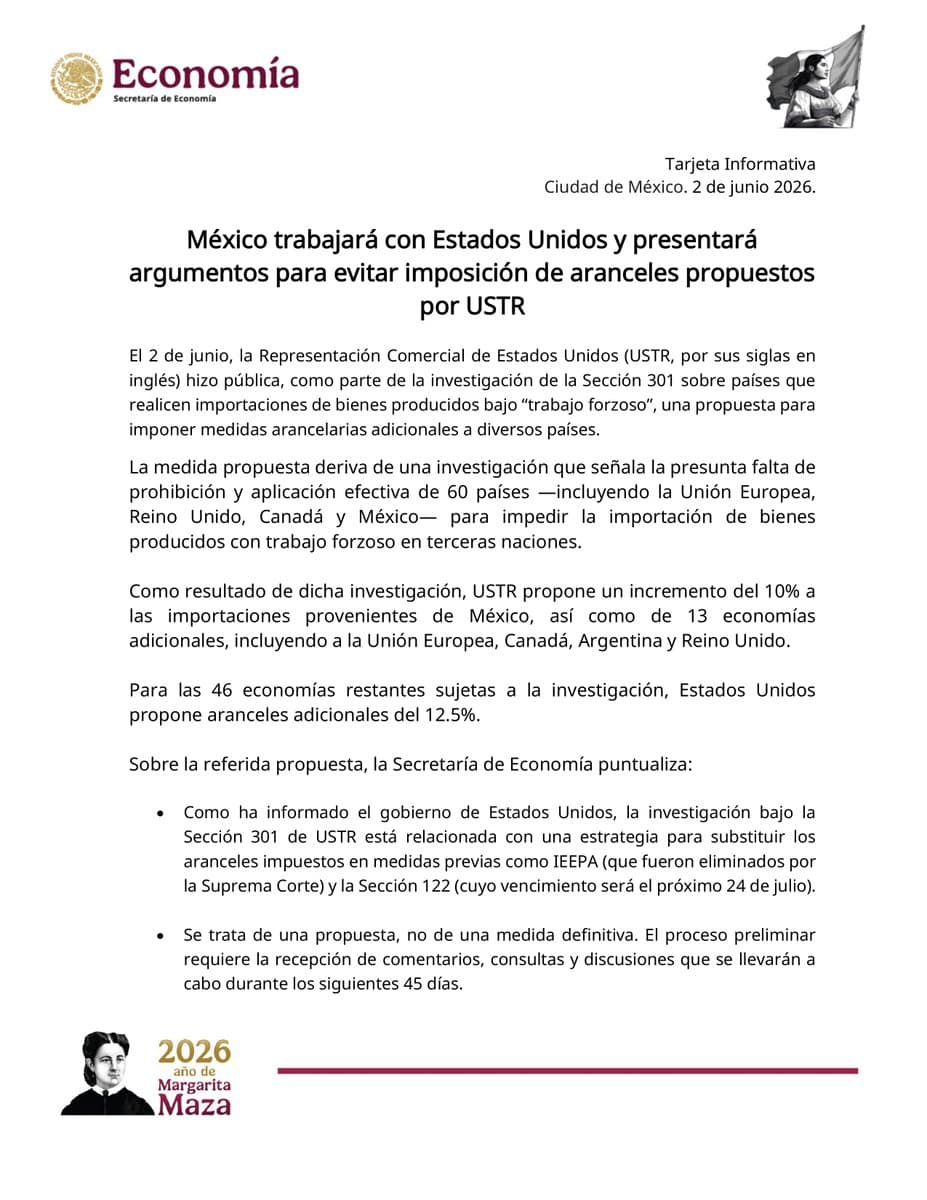
Speaking this week, Ebrard confirmed that the global trading system "as it was known" has changed: the US is consolidating a model built on tariffs, and Mexico does not have the economic power to compel Washington to reverse course. Mexico's Economy Ministry said the country will keep working with the US and present arguments to avoid new duties proposed by the US Trade Representative (USTR). According to the Ministry, roughly 85% of Mexican exports to the US would remain exempt from the newly proposed Trump-administration tariffs thanks to USMCA rules of origin. Separately, Mexico and Canada have asked to extend the USMCA by 16 years — through 2042 — ahead of the treaty's joint review, leaving the decision largely in Washington's hands.
What prediction markets are saying
On the topic of Ebrard, Mexico and US tariffs, prediction markets on Polymarket and Kalshi have leaned toward continued tariff escalation rather than a clean return to free trade. While exact contract odds shift intraday, we estimate markets currently price roughly a 60-70% chance (estimated) that new US tariffs on at least some Mexican goods take effect in 2026, and only a 25-35% chance (estimated) that the USMCA review concludes without major new tariff carve-outs being contested. These are estimates based on the policy direction Ebrard described and public reporting, not confirmed settled markets.
Scenarios and probabilities
- Base scenario: Negotiated coexistence — the USMCA review extends the treaty, ~85% of Mexican exports stay exempt via rules of origin, but a tariff baseline persists on select sectors. Estimated probability: 55%.
- Bull scenario: Washington grants broad exemptions and accepts the 2042 extension cleanly, stabilizing the peso and exports. Estimated probability: 20%.
- Bear scenario: Talks break down, USTR imposes broad tariffs, and the exemption share erodes well below 85%, pressuring the peso and regional supply chains. Estimated probability: 25%.
Impact on prediction markets
Ebrard's concession removes a tail outcome — a full return to tariff-free trade — from the table, which compresses the upside on "free trade restored" contracts and shifts probability mass toward "tariffs persist" markets. Traders should separate the fact (Ebrard's admission and the 85% exemption figure) from the interpretation (where odds settle). Thin liquidity on LATAM-specific contracts means single headlines can move implied probabilities sharply, so read order-book depth before treating an odds move as signal.
Risks and what would invalidate this thesis
- A surprise US-Mexico deal restoring broad tariff-free access would invalidate the "end of free trade" framing and reprice bull contracts upward.
- The 85% export-exemption figure could change if USTR narrows rules-of-origin eligibility, shifting the base case toward the bear scenario.
- Domestic political escalation on either side (sovereignty rhetoric in Mexico, election-driven trade policy in the US) could override economic logic and make market probabilities unreliable.
FAQ
Did Mexico officially end free trade with the US? No. Ebrard admitted Mexico can no longer expect a tariff-free model and lacks leverage to force one, but the USMCA remains in force and ~85% of exports stay exempt under current rules.
How does this affect the Mexican peso? Persistent tariffs and trade uncertainty are generally peso-negative; prediction markets pricing higher tariff odds tend to align with weaker-peso expectations, though the relationship is not mechanical.
Where can I trade this? Trade- and tariff-related contracts appear on Kalshi and Polymarket, and you can track LATAM-focused markets on Predik.
Sources
Track markets like this in real time on Predik.