Gen Z Arbitrage Bots on Prediction Markets: The New Quants Emerging From LATAM
Two viral stories this week reveal a generational shift: teenagers are spotting inefficiencies in prediction markets before institutional traders. A 13-year-old running six Claude Code instances built an arbitrage bot, and a 16-year-old detected Polymarket mispricing a NOAA weather range at 15% when the official forecast gave it 93% probability. With crypto rails and VPN access, young traders in Argentina, Mexico, and Colombia could be next.
Gen Z Arbitrage Bots Are Reshaping Prediction Markets
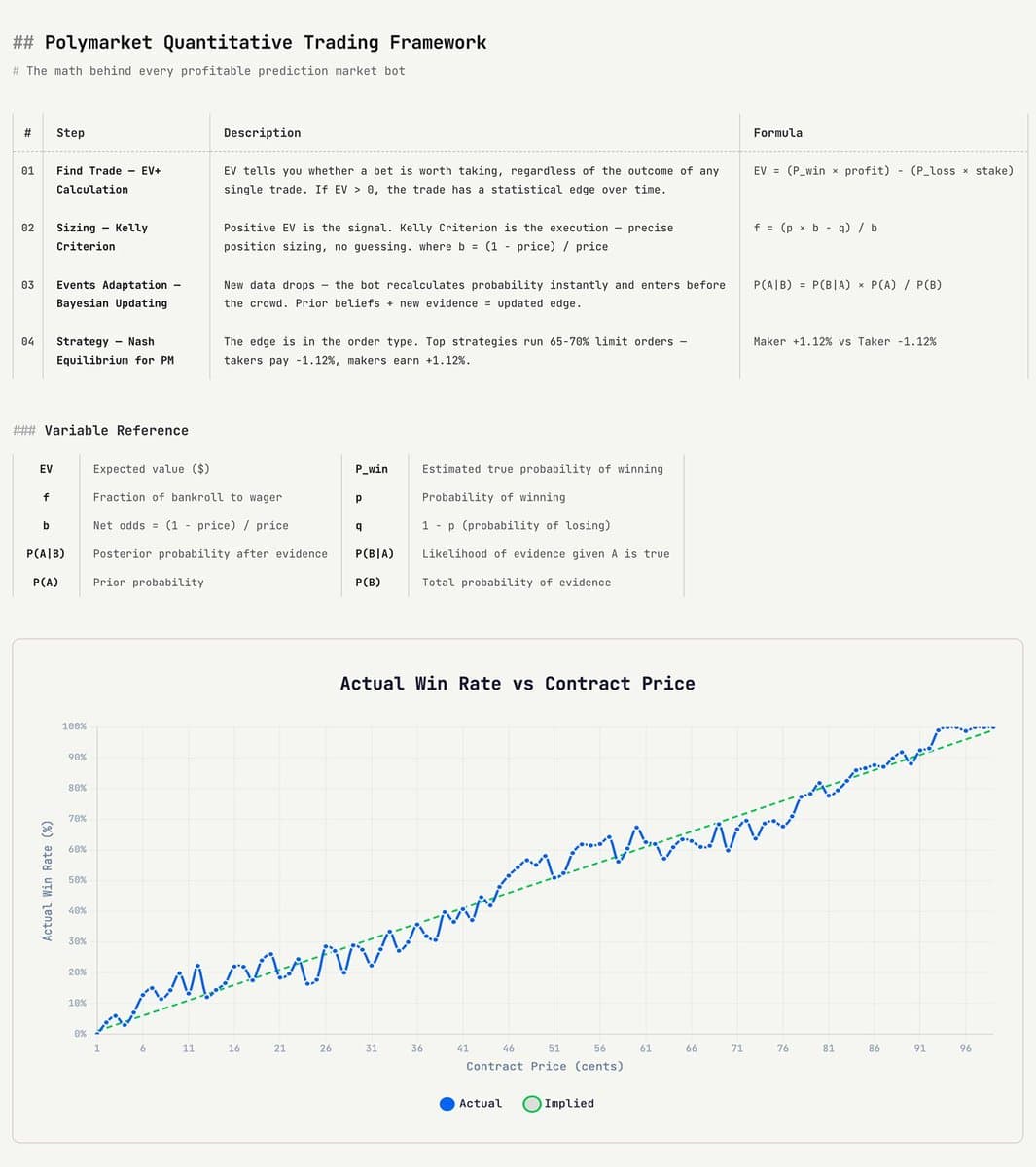
Two viral cases this week show that Gen Z arbitrage bots on prediction markets are exploiting inefficiencies faster than institutional desks. A 13-year-old built a multi-agent arbitrage bot using six parallel Claude Code instances, and a 16-year-old flagged a Polymarket contract priced at 15% when NOAA data implied 93% probability.
For LATAM retail and crypto-native traders, this matters because the same rails — stablecoins, VPNs, and open APIs — are already available in Argentina, Mexico, and Colombia. The barrier to becoming a quant has collapsed to a laptop and a language model.
What happened and why it matters
In early April 2026, two posts on X went viral in the prediction markets community. The first, surfaced by investor Kevin Xu, featured a 13-year-old orchestrating six concurrent Claude Code agents to scan Polymarket, Kalshi, and adjacent venues for cross-market arbitrage. The second, from trader @seelffff, documented a 16-year-old who cross-referenced a Polymarket weather contract against NOAA's public temperature forecast: the market implied 15% probability, NOAA's model output implied roughly 93%. The edge was closed within hours once the thread circulated. Combined, the two anecdotes point to a structural fact: younger, internet-native traders are automating research workflows that would have required a small team two years ago.
What prediction markets are saying
Polymarket's 2026 weekly volume sits in the $150–250M range (estimated from public on-chain data), and weather, macro, and geopolitics contracts remain the most frequently mispriced categories according to community trackers. There is no public contract yet on "Will a LATAM-based trader rank top 10 on Polymarket by 2027?", but informal community estimates place the probability that at least one top-50 Polymarket trader in 2026 is under 20 years old at roughly 40% (estimated).
Scenarios and probabilities
- Base scenario: Gen Z retail arbitrage grows steadily in LATAM through 2026–2027, concentrated in Argentina and Mexico where crypto adoption is deepest. Estimated probability: 55%.
- Bull scenario: A viral LATAM success story (a teen posting six-figure PnL) triggers mass onboarding and spawns local tooling, Spanish-language bot tutorials, and regional liquidity. Estimated probability: 25%.
- Bear scenario: Platforms tighten KYC, restrict API access, or geofence more aggressively, pushing young traders back to informal venues. Estimated probability: 20%.
Impact on prediction markets
When inefficiencies are closed faster, headline odds become more informative — but interpretation risk rises. A contract trading at 60% does not mean a 60% real-world probability if thin liquidity lets a single arbitrage bot pin the price. Traders should separate the market-implied probability from the underlying base rate, especially on low-volume weather, sports, and regional political contracts. Gen Z bot activity tends to tighten spreads on high-signal contracts and leave long-tail markets more volatile.
Risks and what would invalidate this thesis
- Regulatory action in the US or EU that restricts Polymarket or Kalshi access could cut off the venues these young traders use.
- LLM providers could rate-limit or price out multi-agent workflows, raising the bot-building cost floor.
- If institutional market makers deploy comparable automation, retail edge compresses and the "teen quant" narrative fades.
FAQ
Can a minor legally trade on Polymarket from LATAM? Polymarket's terms require users to be of legal age and not located in restricted jurisdictions; enforcement is largely KYC- and geo-based, and VPN use violates the terms.
What is prediction market arbitrage? Buying a contract on one venue and selling the same or equivalent contract on another (or against a public data source) when prices diverge beyond fees.
Why are weather markets especially inefficient? They require cross-referencing free government data (NOAA, national meteorological services) that most retail traders do not routinely check.
Sources
- Kevin Xu on X — 13-year-old multi-agent arbitrage bot
- @seelffff on X — NOAA vs Polymarket weather mispricing
- Polymarket
Track markets like this in real time on Predik.