LATAM's Far-Right Shift in 2026 Elections: What Polymarket and Kalshi Are Pricing
A viral post with 36,000+ likes captured a regional mood — and prediction markets had already priced it. Right-wing candidates lead the odds across several Latin American races on Polymarket and Kalshi, echoing the momentum of Argentina's Milei and El Salvador's Bukele. Here is how prediction markets treat this conservative wave as an aggregate trend, and why LATAM retail traders can use them as a faster electoral thermometer than traditional polls.
LATAM's Far-Right Shift in 2026 Elections: How Polymarket and Kalshi Are Pricing It
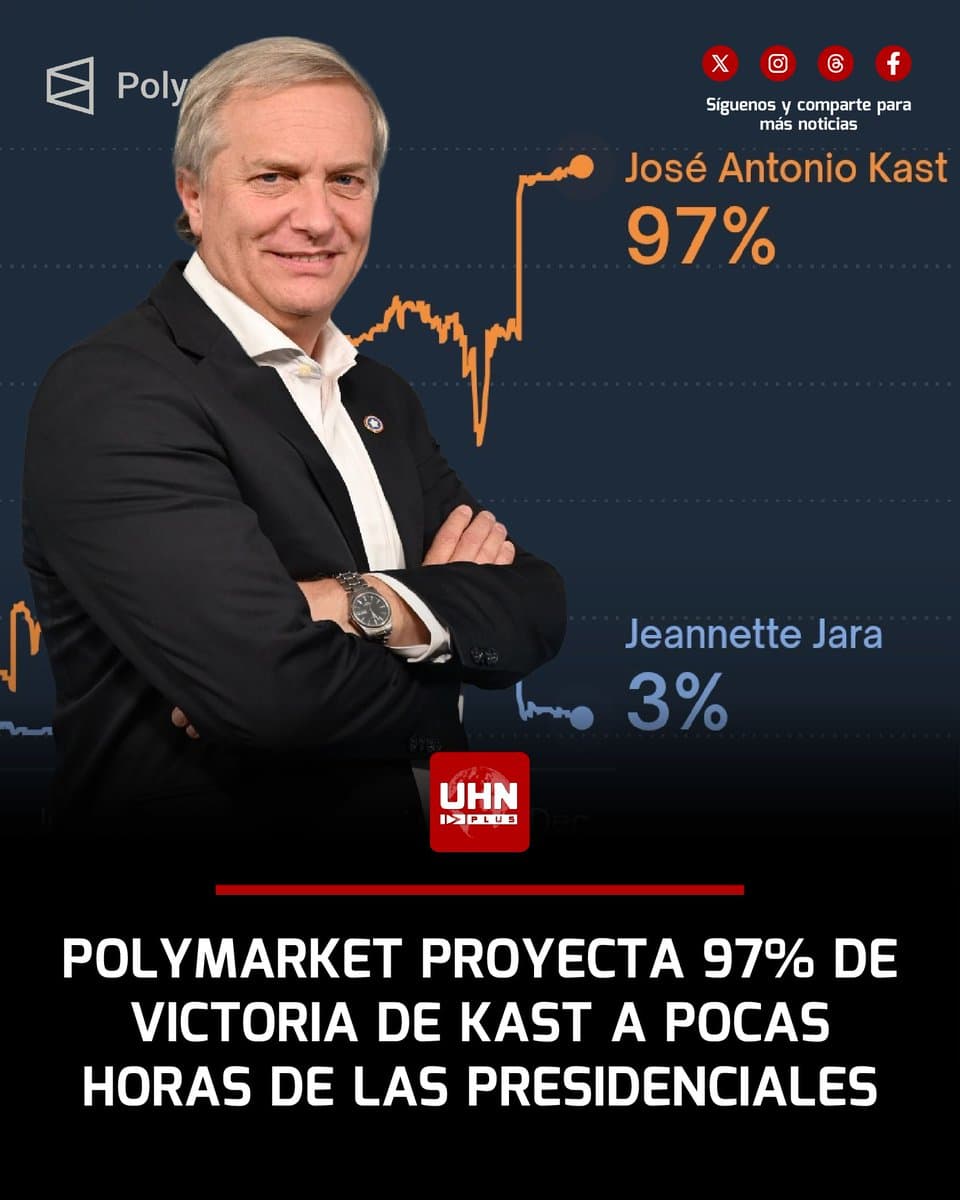
Prediction markets are pricing a regional far-right shift in LATAM 2026 elections as a trend, not a set of isolated cases: as of mid-June 2026, right-wing candidates lead the implied probabilities across several Latin American races on Polymarket and Kalshi. The clearest recent example came in Chile, where Polymarket gave conservative candidate José Antonio Kast roughly a 97% chance heading into the December 2025 vote.
This matters for LATAM retail and crypto-native traders because prediction-market odds move continuously, in dollars, and often react faster than traditional polling. A viral social post — more than 36,000 likes, framed as "watching the far right win all across LATAM" — captured a regional mood that the markets had already begun to price weeks earlier.
What happened and why it matters
The narrative rests on two anchor cases. In Argentina, Javier Milei's approval has swung between roughly 48% and 65% over 2025 according to aggregated leader-approval trackers, keeping his liberalizing agenda politically alive. In El Salvador, Nayib Bukele has sat at a remarkably stable ~91% approval across every monthly reading from late 2024 through 2025. Together they form the template — economic liberalization in Argentina, hardline security in El Salvador — that commentators now project onto the rest of the region.
The most concrete market signal arrived in December 2025: hours before Chile's presidential election, Polymarket priced conservative candidate José Antonio Kast at about 97% to win, far above his left-wing rival. Attention has since rotated to upcoming races in Colombia and Peru, where right-leaning candidates have featured among the favorites in market order books.
What prediction markets are saying
On the LATAM far-right shift, Polymarket and Kalshi are broadly aligned: right-of-center candidates hold the favorite slot in several active 2026 election markets. The Chilean market (~97% for Kast pre-vote) is documented; the Colombia and Peru figures below are estimated from reported favorite status and typical market spreads, not exact live quotes — verify them on the platforms before trading. The pattern traders watch is the aggregate: multiple national markets leaning the same direction at once, which is what turns isolated wins into a priced "conservative wave."
Scenarios and probabilities
- Base scenario: The far-right/center-right shift continues as the dominant aggregate trend through 2026, with right-leaning candidates favored in a majority of the major LATAM races markets are tracking — estimated 55–60%.
- Bull scenario: A near-sweep, where conservative candidates convert favorite status into actual wins in most contested races (Colombia, Peru and beyond), cementing a regional bloc — estimated 20–25%.
- Bear scenario: The trend stalls or reverses as incumbents' economic pain, corruption scandals, or strong left turnout flip key races, and the "wave" narrative fades — estimated 20–25%.
Impact on prediction markets
When a regional narrative takes hold, correlated markets can move together, which amplifies both signal and noise. A 97% price means the market is highly confident — but it is not certainty, and thin liquidity or late scandals can reprice fast. Traders should separate the fact (right-wing candidates are currently favored in several markets) from the interpretation (that this proves an unstoppable ideological tide). Approval ratings, scandals, and security headlines feed the narrative but do not mechanically determine vote outcomes.
Risks and what would invalidate this thesis
- Low liquidity or concentrated positions can distort implied probabilities, especially in smaller national markets — a high price is not always a deep, efficient one.
- Late-breaking scandals can reprice a race overnight; 2026 has already seen heavy cross-border political allegations circulating in the region that could swing public mood.
- High approval does not equal electoral victory — a popular incumbent's movement can still lose specific races to turnout, coalitions, or local dynamics.
FAQ
Are right-wing candidates really favored across LATAM on prediction markets? As of mid-June 2026, right-leaning candidates hold favorite status in several active Polymarket and Kalshi election markets, and Polymarket priced Chile's Kast near 97% before the December 2025 vote.
Why use prediction markets instead of polls? They update continuously in real money and often react faster to new information than periodic polls — though they are not infallible and can be distorted by thin liquidity.
What are the key 2026 races to watch? Colombia and Peru are the most-watched upcoming contests where market participants have flagged right-leaning favorites, alongside the established Milei and Bukele reference cases.
Sources
Track markets like this in real time on Predik.