White House Insider Trading and Prediction Markets: What the Alleged $100K-a-Month Early-Access Subscription Means for Tariff Bets
On September 23, 2026, Senator Chris Murphy alleged that early access to White House economic and trade policy announcements is being sold for $100,000 a month, and called it an "insider trading subscription service." Polymarket and Kalshi contracts on tariffs, trade deals and Fed decisions reprice within seconds of official news. That makes paid leaks a direct source of information asymmetry. This guide covers what was alleged, what prediction markets are likely pricing, and how LATAM traders can spot unusual price moves before announcements in tariff markets tied to Mexico, Colombia and Brazil.
White House Insider Trading and Prediction Markets: The $100K Subscription Allegation
On September 23, 2026, U.S. Senator Chris Murphy (D-CT) alleged that a paid service sells early access to White House economic and trade policy announcements for $100,000 a month, and called it an "insider trading subscription service." If the claim holds up, it creates a paid channel of asymmetric information. That channel would hit prediction markets on tariffs, trade deals and Fed policy first, because those contracts reprice within seconds of any announcement.
This matters in Latin America because the most active trade-policy contracts often involve the region: U.S. tariffs on Mexico, Colombia and Brazil, the USMCA review, and trade retaliation. A trader in Mexico City, Bogotá or São Paulo who buys "no new tariff" at 70 cents could be trading against someone who already knows the answer. Murphy's post spread fast, with more than 23,800 likes and 10,800 reposts within hours, so expect scrutiny of prediction-market order flow to increase.
What happened and why it matters
Facts reported so far:
- The allegation: Senator Murphy says early access to White House economic and trade announcements is being offered for about $100,000 per month. As of publication, no public document, named seller or official investigation has confirmed the allegation. Treat it as a political accusation, not a proven fact.
- A crowded calendar: The week of September 21, 2026, was already one of the most event-heavy of the year. Traders were watching a Fed chair speech on Monday, a flagged FOMC announcement, and a Trump announcement set for 9:55 a.m. ET on Tuesday, September 22, just after the U.S. market open. Trump also cut short a stay at Camp David and returned to the White House on Saturday, September 19, a day earlier than planned.
- Regulation in motion: Around September 18, the CFTC sent a new proposed crypto-market rule to the White House Office of Information and Regulatory Affairs (OIRA) for review. That came days after the CLARITY Act failed to advance in the U.S. Senate.
- Precedents: In April 2025, Democrats asked for investigations into trading before the 90-day tariff pause was announced. In January 2026, a newly created Polymarket wallet reportedly made hundreds of thousands of dollars betting on Nicolás Maduro's removal hours before the U.S. operation in Venezuela. That case led to proposed U.S. legislation to ban officials from trading on prediction markets.
Interpretation: Prediction markets settle on binary, time-stamped events such as "Will the U.S. announce X% tariffs on Brazil by date Y?" That makes them the most efficient place to monetize a leak, and also the easiest place to spot one. Stocks and FX absorb news through many channels. A binary contract moving from 15% to 60% with no public headline leaves a very clear footprint.
What prediction markets are saying
At publication, we could not verify a live Polymarket or Kalshi contract that asks directly whether Murphy's allegation will be confirmed or investigated. The figures below are estimated from context and similar past markets:
- Formal investigation (congressional letter, inspector general, or SEC/CFTC inquiry) opened by year-end: estimated 25–35%. The minority party can send letters but cannot issue subpoenas.
- New tariff action on at least one of Mexico, Colombia or Brazil before December 31, 2026: estimated 45–55%, given how often tariff threats have been issued and then reversed since 2025.
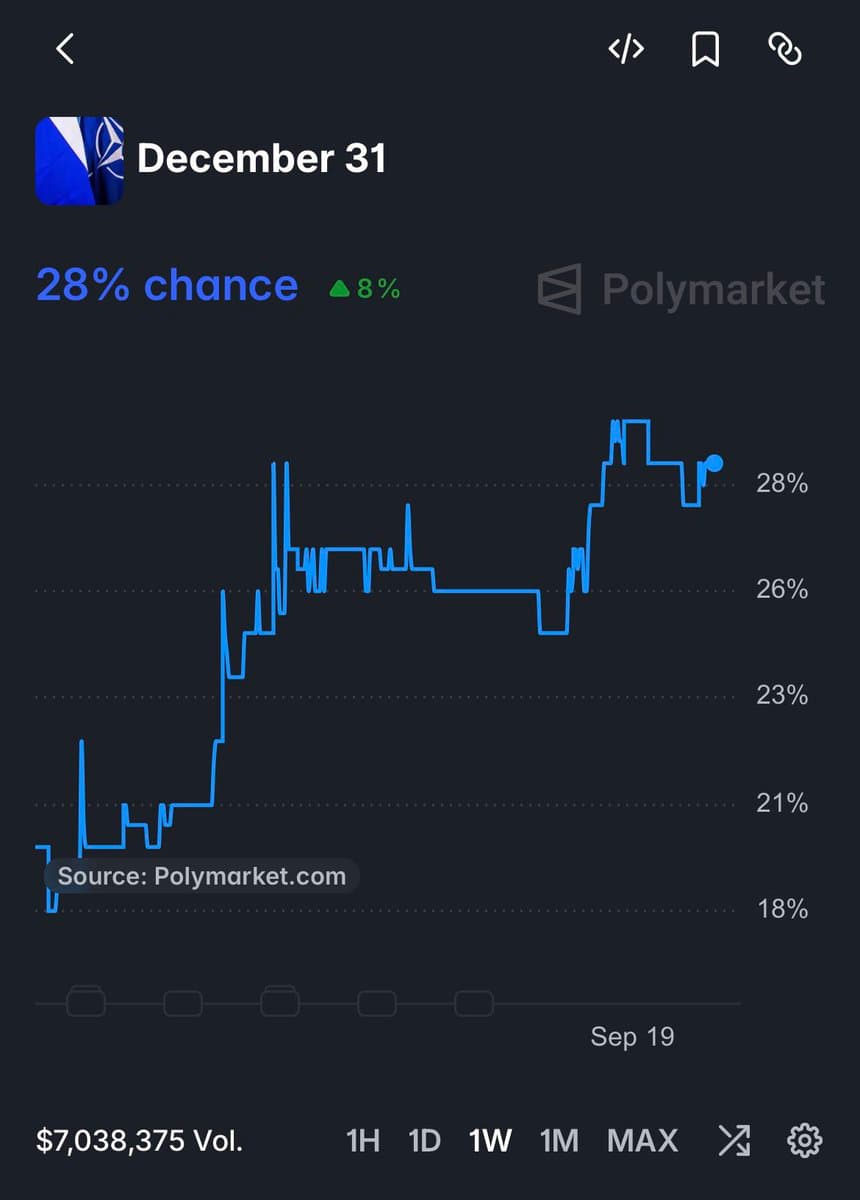
- Broader political context: Markets have recently moved toward Democrats in U.S. Senate control odds ahead of the November midterms. Geopolitical risk contracts are also elevated, with roughly 30% priced on Russia attacking a NATO country. Both raise the value of early information from the White House.
Robinhood CEO Vlad Tenev said this week that event contracts on crypto will overtake sports on prediction markets within a few years. More liquidity in policy and crypto contracts also means more reward for anyone trading with inside information.
Scenarios and probabilities
- Base scenario (estimated 55%): The allegation stays in the political arena. Democrats send letters to the SEC, CFTC and White House counsel, the administration denies it, and nothing formal happens before the midterms. Prediction-market volumes on tariffs keep growing, and on-chain analysts flag more suspicious wallets before announcements.
- Bull scenario for market integrity (estimated 20%): Evidence surfaces, such as a named service, subscriber lists or on-chain trails. That leads to a formal inquiry and pressure on Polymarket and Kalshi to tighten KYC, publish insider-trading rules, and cooperate with regulators. Short term this is volatile, but it is good for the long-term credibility of prediction markets.
- Bear scenario (estimated 25%): The story turns into a case against prediction markets themselves. Lawmakers use it to push restrictions on political and policy contracts, state regulators widen their challenges to Kalshi, and the CFTC rulemaking now at OIRA becomes more restrictive. LATAM users of offshore platforms face new access limits.
Impact on prediction markets: how to spot possible insider trading in tariff bets
If leaks are being sold, they should show up in the data. Here is a practical checklist for LATAM traders watching tariff contracts on Mexico, Colombia and Brazil:
- Volume spikes without news: Compare hourly volume with its 7-day average. A jump of 5x or more with no headline on wire services, Truth Social or White House feeds is the main red flag.
- Price moving before the timestamp: Note the exact time of the official announcement, then look at the 30–120 minutes before it. A real surprise produces a vertical jump at the announcement. A leak produces a slow climb beforehand.
- New or single-use wallets (Polymarket): Wallets funded hours earlier, often through a bridge or exchange, that place one large position in one policy market and then go quiet are the pattern seen in the January 2026 Venezuela case.
- One-sided order books: Large market orders that clear several price levels at once, when the trader could have used patient limit orders, suggest urgency. Urgency suggests the trader expects the window to close soon.
- Cross-checks with FX: Look for moves in USD/MXN, USD/COP or USD/BRL in the same window. If a tariff contract and the peso or real move together before any public news, the signal is stronger.
- Timing: Moves at off-hours or on weekends, such as Saturday nights before Monday announcements, deserve extra attention.
Interpretation risk: Not every early move is insider trading. Trump often previews decisions in interviews, and reporters get tips that move prices legitimately. Informed analysts also read public signals, such as a canceled trip or an unscheduled 9:55 a.m. slot. The case for insider trading only holds up when several flags appear together.
This is also why prediction markets work better as corruption seismographs than as casinos. Markets built on public, time-stamped trades leave an auditable record that private phone calls to hedge funds never leave.
Risks and what would invalidate this thesis
- The allegation is unproven: If no service, seller or buyer is identified, the story may fade quickly and prediction markets may not change at all.
- Leaks may flow elsewhere: Sophisticated buyers of early information would probably trade futures, FX or options with more liquidity rather than thin prediction-market contracts. In that case, prediction markets would show only faint signals.
- Regulatory backlash: Lawmakers could restrict policy contracts instead of punishing leakers. That would remove the transparency tool that makes detection possible.
- False positives: Traders who treat every price spike as insider activity risk fading real, legitimate information and losing money.
FAQ
Is insider trading illegal on prediction markets? On Kalshi, which is regulated by the CFTC, trading on material non-public information is prohibited, and the CFTC has anti-fraud authority. Polymarket's international platform relies on its own terms of service, which leaves enforcement less clear. Federal employees are also bound by ethics rules on using non-public information.
What exactly did Senator Murphy allege? He said access to upcoming White House economic and trade announcements is being sold for about $100,000 a month, and described it as an "insider trading subscription service." No official body has confirmed it as of September 23, 2026.
Which LATAM markets are most exposed? Tariff and trade-deal contracts involving Mexico (USMCA review), Brazil (existing punitive tariffs since 2025) and Colombia (repeated tariff threats tied to migration and drug policy). These markets react fastest to White House decisions.
Can on-chain data prove a leak? No, not by itself. Wallet timing and funding patterns can show suspicious behavior, but proving it usually takes subpoenas, exchange KYC records and communications data.
Sources
Track markets like this in real time on Predik.