Japan's $620B Treasury Bond Dump: What It Means for Bitcoin, LATAM, and Prediction Markets
Japan is preparing to liquidate up to $620 billion in U.S. Treasuries — 12x the December 2025 sale that crashed markets 15% in 30 minutes. With $1 trillion already wiped from equities and BlackRock dumping $200M in Bitcoin in five minutes, prediction markets are repricing global recession odds. Here is what LATAM traders need to watch.
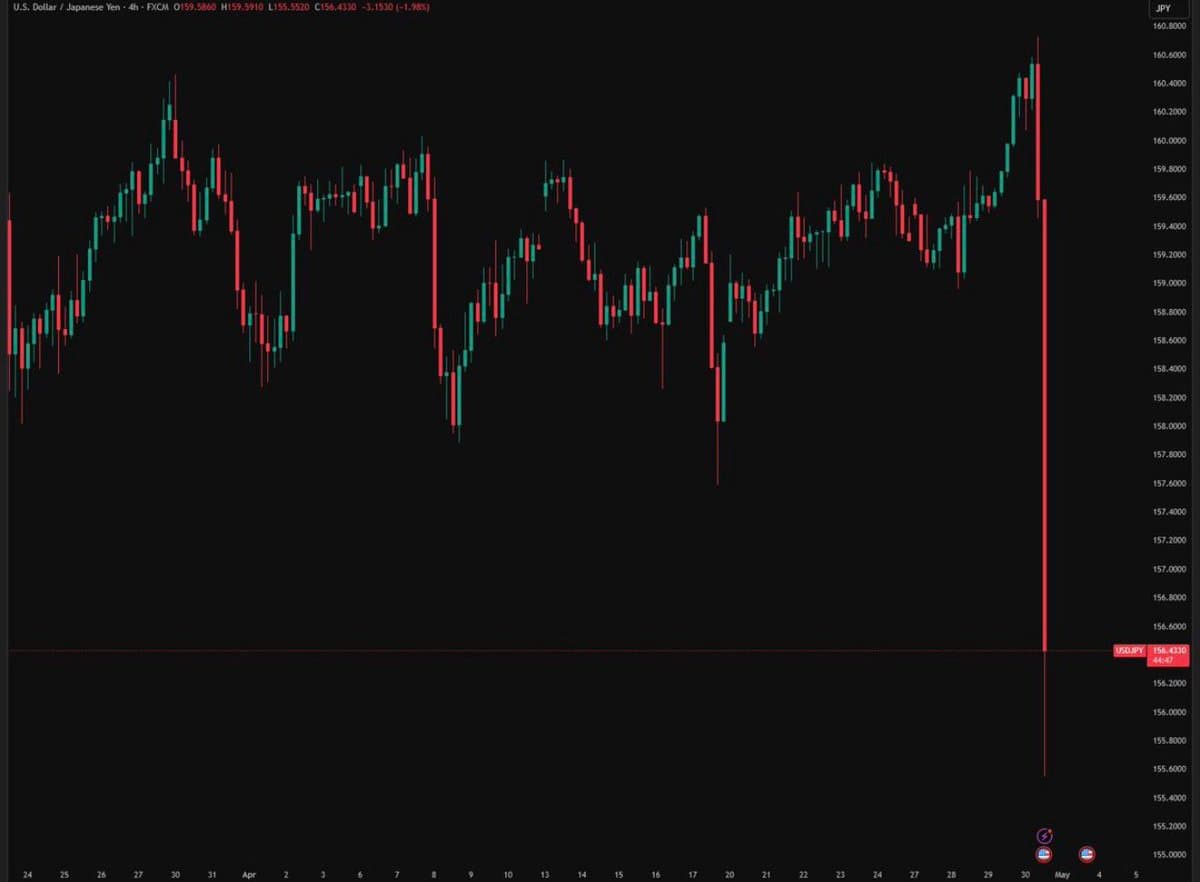
Japan's massive U.S. bond sell-off shakes crypto and prediction markets
Japan is positioning to liquidate roughly $620 billion in U.S. Treasury bonds — about twelve times the $50 billion sale in December 2025 that triggered a 15% market drop in 30 minutes. Prediction markets are already repricing global recession probabilities and the next Bitcoin leg.
For LATAM traders, the spillover is not theoretical: a disorderly Treasury move usually means a stronger dollar against emerging-market currencies, capital flight, and sharp repricing across crypto and equity prediction contracts on platforms like Kalshi, Polymarket, and Predik.
What happened and why it matters for the Japan bond dump
According to flow data circulating since late April 2026, Japan — the largest foreign holder of U.S. debt with around $1.1 trillion in Treasuries — is preparing to offload up to $620 billion to defend the yen. The Bank of Japan's 20-year yield recently hit 3.3%, a multi-decade high, while the yen continues to weaken against the dollar.
The mechanics are brutal in their simplicity: to support the yen, the BOJ sells dollars; selling dollars drains global liquidity; draining liquidity pushes Treasury yields higher; higher yields hit risk assets. On April 30, around $1 trillion was wiped from U.S. equity market cap in a single session, and BlackRock reportedly liquidated more than $200 million in Bitcoin within a five-minute window, accelerating the intraday drawdown.
Reference point: in December 2025, a $50 billion Japanese Treasury sale was enough to take broad indices down 15% in 30 minutes. A $620 billion operation is in a different category entirely.
What prediction markets are saying about Japan, bonds, and Bitcoin
On Kalshi and Polymarket, contracts tied to U.S. recession in 2026, Bitcoin year-end price, and Fed rate-cut timing have all moved in the past week. Based on current quotes and recent flow:
- Implied probability of a U.S. recession being declared in 2026: roughly 42–48% (estimated), up from the low 30s in mid-April.
- Bitcoin closing above $90,000 by December 31, 2026: around 38% (estimated), down from ~55% before the Japan headlines.
- BOJ rate hike before year-end: priced near 70% (estimated) on macro contracts.
These are directional reads, not exact prints — odds on event contracts shift hour by hour and depend on the specific market wording.
Scenarios and probabilities
- Base scenario (≈55%): Japan executes a controlled, staggered sale. Treasury yields rise 30–60 basis points, Bitcoin corrects 10–15% before stabilizing, and LATAM currencies (MXN, BRL, COP, CLP) weaken 3–6% against the dollar over the following month.
- Bull scenario (≈25%): The Fed and Treasury coordinate, the sale is absorbed without disorder, the dollar weakens on rate-cut expectations, and Bitcoin rotates into a safe-haven narrative — pushing it 15–25% higher into Q3 2026.
- Bear scenario (≈20%): Forced or accelerated liquidation. Yields spike sharply, equities drop another 8–12%, Bitcoin falls 20–30% (echoing the December 2025 playbook), and LATAM sees a Q3 capital-flight episode similar to 2018 and 2022.
Impact on prediction markets and LATAM
Prediction markets are unusually well-suited to this kind of macro event because they price discrete, dated outcomes — "recession declared by X date," "BTC above Y on date Z," "Fed cuts by Q3." When a single news catalyst (Japan bond flows) moves multiple variables at once — yields, dollar, equities, crypto — correlated contracts can become temporarily mispriced. That creates opportunity, but also interpretation risk: a 45% recession probability is not the same as a forecast, it is the market's weighted view at one point in time.
For LATAM specifically, watch contracts and proxies tied to the Mexican peso, the Brazilian real, regional sovereign spreads, and stablecoin demand on local ramps. Historically, a strong-dollar shock from a Treasury dislocation pulls capital out of emerging markets within days, not months.
Risks and what would invalidate this thesis
- Japan opts for direct yen intervention or yield-curve control adjustments instead of large-scale Treasury sales, neutralizing the supply shock.
- The Federal Reserve announces emergency liquidity facilities or swap-line expansion that absorbs the bond supply without disorder.
- The reported $620 billion figure proves to be an aggregate ceiling rather than a near-term execution target — actual flows could be a fraction of that, spread over quarters.
- A separate macro catalyst (China stimulus, Middle East de-escalation, surprise CPI print) overwhelms the Japan story before it fully transmits.
FAQ
How much in U.S. bonds does Japan actually hold? Roughly $1.1 trillion, making it the single largest foreign holder of U.S. Treasuries.
Why does a Japanese bond sale matter for Bitcoin? Cheap yen has historically funded carry trades into risk assets, including crypto. When the BOJ tightens and the yen rises, that funding unwinds and risk assets — Bitcoin included — typically come under pressure.
What is the most direct LATAM impact? A stronger dollar from rising Treasury yields tends to weaken regional currencies, raise local rates, and squeeze dollar-denominated debt service for sovereigns and corporates.
Sources
Track markets like this in real time on Predik.