Miami Heat NBA Odds After Klay Thompson and Nick Richards: How Prediction Markets Repriced the East
The Miami Heat closed out their 14-man roster on August 27, 2026 by agreeing to a one-year, non-guaranteed deal with free agent center Nick Richards, capping an offseason that already delivered Giannis Antetokounmpo, Bobby Portis, Tim Hardaway Jr. and Klay Thompson. Kalshi still priced Miami at just 8% to win the Eastern Conference after the Thompson signing — fifth behind the 76ers (23%), Knicks (22%), Celtics (13%) and Raptors (10%). That gap between roster reality and posted probability is exactly the kind of mispricing free agency creates, and why late-August signing windows tend to be the best value stretch of the year for sports traders on Polymarket, Kalshi and Predik.
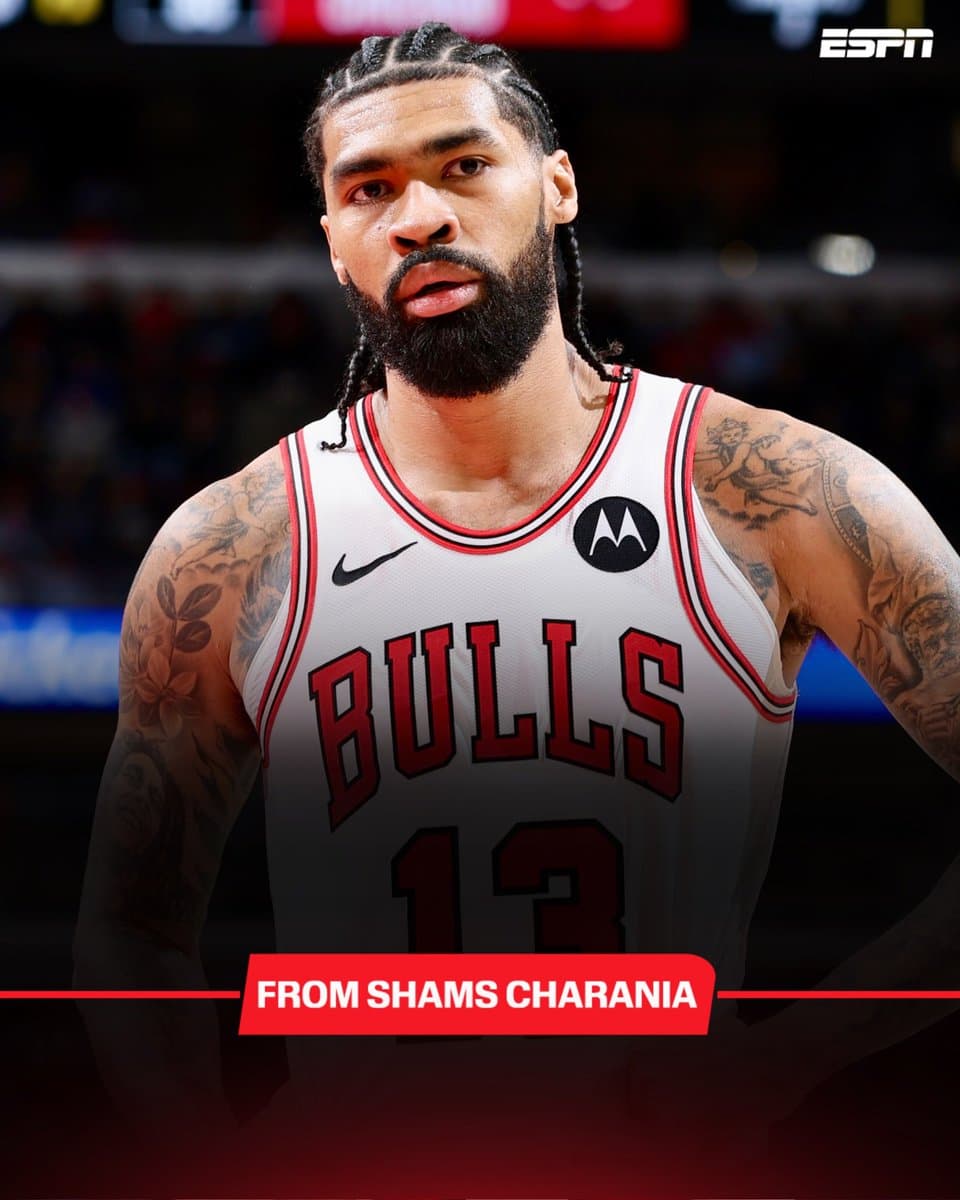
Miami Heat NBA odds after Klay Thompson: how prediction markets repriced the East
The Miami Heat filled roster spot No. 14 on August 27, 2026, agreeing to a one-year deal with free agent center Nick Richards — the final piece of an offseason that already included Giannis Antetokounmpo, Klay Thompson, Bobby Portis and Tim Hardaway Jr. Despite that haul, Miami Heat NBA odds to win the Eastern Conference sat at roughly 8% on Kalshi immediately after the Thompson signing, fifth in the conference.
For LATAM retail and crypto-native traders, this is a textbook case of how prediction markets absorb news unevenly. Roster construction happens in discrete, reported events — a buyout here, a minimum contract there — but market probabilities move in fits and starts, often lagging the actual talent change by days. Understanding that lag is where the edge lives.
What happened and why it matters
On August 21, 2026, the Dallas Mavericks bought out Klay Thompson at the player's request so he could join a contender. After clearing waivers, Thompson signed with Miami. Six days later, on August 27, the Heat agreed to terms with free agent center Nick Richards on a one-year deal that will not be guaranteed until the season opens — structurally similar to the Precious Achiuwa arrangement Miami used the previous year.
That signing took Miami to 14 standard contracts, leaving a 15th slot open. Because Richards' money is non-guaranteed, the Heat retain flexibility to move on if a better player shakes loose. Roster mechanics reinforce that optionality: only $500,000 of Myron Gardner's $2.6 million is guaranteed.
The full Miami offseason ledger: acquired Giannis Antetokounmpo, acquired Bobby Portis, extended Andrew Wiggins, drafted Ryan Conwell, re-signed Simone Fontecchio, signed Tim Hardaway Jr., signed Klay Thompson, signed Nick Richards.
A plausible opening lineup reads Davion Mitchell, Klay Thompson, Andrew Wiggins, Giannis Antetokounmpo and Bam Adebayo, with Nikola Jovic, Pelle Larsson, Bobby Portis, Tim Hardaway Jr., Richards, Conwell, Gardner, Fontecchio and Dru Smith behind them.
On production: in his second season back from an Achilles tear (2022-23), Thompson posted 21.9 points, 4.1 rebounds and 2.4 assists in 33.0 minutes on 44/41/88 shooting splits. Richards, in 20 games with Chicago last season, averaged 9.4 points, 7.6 rebounds and 1.0 blocks on 52.3% shooting with four double-doubles in 22.4 minutes. Neither is a star at this stage. Both are rotation-grade at near-minimum cost, which is the specific thing that moves win totals more than conference odds.
One non-trivial overhang: Antetokounmpo has publicly said he intends to return to Milwaukee once his Miami cycle ends, without specifying when that is. That is a long-horizon narrative risk, not a 2026-27 one, but it feeds futures pricing beyond this season.
What prediction markets are saying about Miami Heat NBA odds
The cleanest observed data point: after the Thompson signing, Kalshi's Eastern Conference winner market had Miami at 8%, fifth in the conference. The full board read 23% 76ers, 22% Knicks, 13% Celtics, 10% Raptors, 8% Heat, 7% Cavaliers, 7% Pistons, 7% Pacers.
Note what that board implies. The listed eight teams sum to roughly 97%, leaving almost nothing for the rest of the conference — a normal vig-and-rounding artifact in a thin August market, not a real signal. Treat any single quoted number from an early-offseason board as noisy.
We have not observed a post-Richards quote. Our estimate is that the Richards signing itself moved Eastern Conference odds by well under one percentage point — a 14th-man backup center is close to a rounding error in a conference futures market. Any move you see on August 27-28 is more likely residual repricing of the Thompson and Antetokounmpo news still working through a low-liquidity book.
Estimated fair range for Miami's Eastern Conference probability given the full roster: 10-14%, above the 8% observed. That is an estimate, not a quote. Regular-season win total markets are where we would expect the sharper reaction — depth signings raise the floor of a season more than they raise the ceiling, and win totals price floors.
Scenarios and probabilities
- Base scenario: Miami's Eastern Conference odds drift up into the 10-14% band over September and October as preseason liquidity arrives and books converge on the roster rather than the news cycle. Antetokounmpo and Adebayo carry the load, Thompson is a high-variance spacing piece, Richards is a 15-20 minute backup five. Estimated probability: 55%.
- Bull scenario: Health holds, Thompson's shooting travels, and Miami reprices toward the 76ers-Knicks tier at 18-22% by midseason, with the win total clearing the posted line. Estimated probability: 25%.
- Bear scenario: An Antetokounmpo or Adebayo injury, or an aging-curve collapse from Thompson, drops Miami back toward 4-6% and turns the roster's thin margin for error into a play-in outcome. Estimated probability: 20%.
Impact on prediction markets
Free agency is structurally different from in-season trading. In-season, information arrives continuously and books are deep. In late August, information arrives in large discrete jumps — a single reported agreement — into books that are thin, wide and slow to correct. That combination is why the signing window often produces the widest bid-ask spreads and the largest gaps between posted probability and defensible fair value all year.
Two interpretation risks worth naming. First, headline bias: a signing that generates enormous engagement is not necessarily a signing that changes expected wins. The Thompson news moved far more attention than it moved talent; a non-guaranteed backup center moves almost no attention and slightly more roster reality. Markets sometimes get this backwards for a few days.
Second, resolution mechanics. Conference-winner contracts and season win-total contracts respond to completely different inputs. Depth signings compress downside variance, which is a win-total story. Conference odds are driven by top-end talent and playoff health. Traders who blur the two end up buying the wrong contract on the right thesis.
The practical read: if you believe the roster is better than 8% priced it, the higher-conviction expression is the win total, not the conference future, because the depth argument maps directly onto the contract you are buying.
Risks and what would invalidate this thesis
- Injury to Antetokounmpo or Adebayo. Miami's entire repricing case rests on two players. A significant injury to either collapses the thesis immediately and there is no depth substitute for it on this roster.
- Thompson's age curve. The 21.9-point season cited above is from 2022-23, not last year. Extrapolating those splits forward is the single weakest assumption in the bull case.
- Non-guaranteed contracts cut both ways. Richards is not guaranteed until the season opens and Gardner is guaranteed for only $500,000 of $2.6 million. The roster you are pricing in August is not necessarily the roster that plays in October.
- Thin August liquidity. An 8% quote in a low-volume market may not be tradeable at size. Apparent edge can disappear on execution.
- Competitive response. The 76ers, Knicks and Celtics still have roster spots and the buyout market is not closed. Miami's relative position can erode without Miami doing anything wrong.
- Long-horizon Antetokounmpo risk. His stated intention to eventually return to Milwaukee is a real input for 2027 and 2028 futures, even if it does not touch 2026-27.
FAQ
What are the Miami Heat's NBA odds to win the Eastern Conference? Roughly 8% on Kalshi immediately after the Klay Thompson signing, fifth in the conference behind the 76ers (23%), Knicks (22%), Celtics (13%) and Raptors (10%). No post-Richards quote has been observed.
Did the Nick Richards signing change Miami's championship odds? Estimated: barely. A 14th-man reserve center on a non-guaranteed one-year deal is worth well under one percentage point in a conference futures market. Its real effect is on regular-season win totals, where depth matters more.
Why is free agency considered good value for sports traders? Because news arrives in large discrete jumps into thin, wide, low-liquidity books. The gap between posted probability and defensible fair value is usually at its widest in the signing window, before preseason volume arrives and corrects it.
How many roster spots do the Heat have left? One. Richards took the 14th standard contract on August 27, 2026, leaving a 15th slot open — and because his deal is non-guaranteed, Miami also retains flexibility on the 14th.
Sources
Track markets like this in real time on Predik.