Midterms 2026 Voter Priorities and Prediction Markets: Climate Ranks 14th at 3%
New polling analysis shows climate change sits 14th among issues driving the November 2026 US midterm vote, at just 3%, while the share calling it a very serious problem is stuck near 40% — the same as 2016. For prediction market traders, the gap between media salience and voting salience is where money is lost. Economy, immigration and cost of living move House and Senate contracts on Kalshi and Polymarket; the climate agenda does not. For LATAM, November decides whether Trump's tariff and immigration posture toward Mexico, Colombia and Central America continues — a policy path now priced as a live probability.
Midterms 2026 Voter Priorities and Prediction Markets: What Actually Moves the Odds
Climate change ranks 14th among the issues driving the November 2026 US midterm vote, cited by roughly 3% of voters, and the share who call it a very serious problem has been frozen near 40% since 2016. Midterms 2026 voter priorities in prediction markets are set by the economy, cost of living and immigration — not by the issues dominating headlines.
That distinction matters if you trade political contracts. Media salience and electoral salience are two different variables, and confusing them is one of the most expensive mistakes on Polymarket and Kalshi. For LATAM readers the stake is concrete: control of the House and Senate determines whether the current tariff and immigration architecture aimed at Mexico, Colombia and Central America hardens, holds or gets checked — and that outcome is quoted in real time as a probability.
What happened and why it matters
An election analyst circulated polling data in early August 2026 that cuts against the prevailing media consensus heading into the November 3, 2026 midterms. Two numbers stand out. First, climate change lands at position 14 on the list of issues voters say will decide their vote, at about 3%. Second, the share of Americans describing climate change as a very serious problem sits around 40% — statistically unchanged from 2016, across a decade of intense coverage.
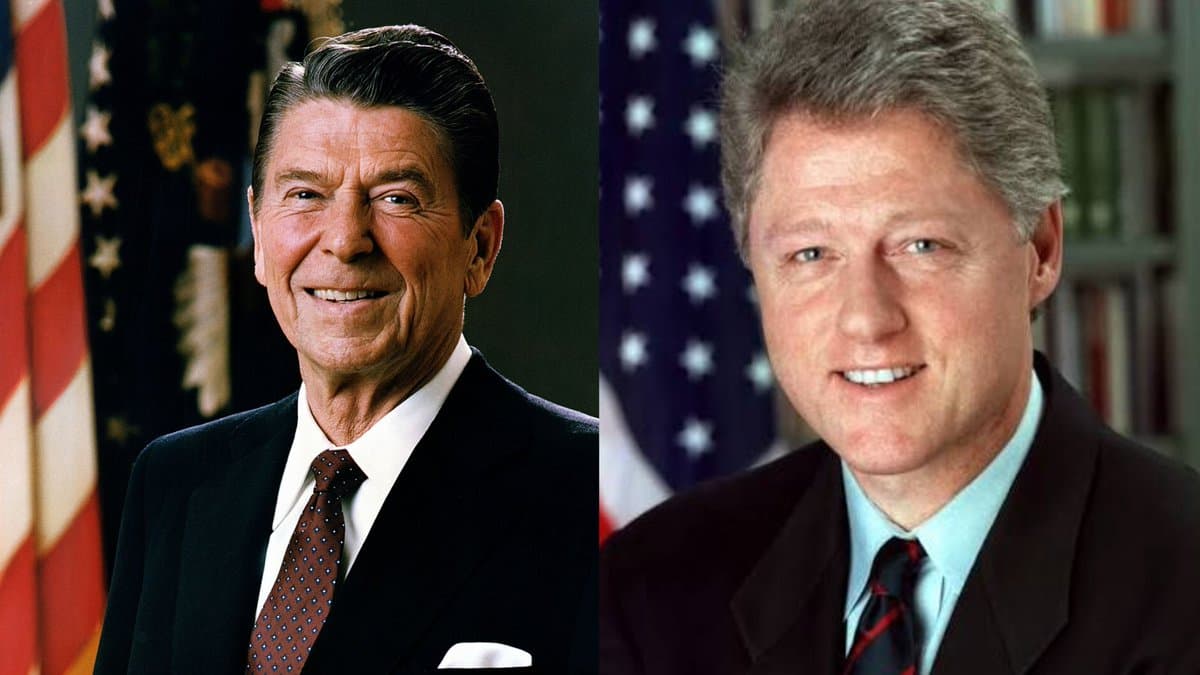
The structural context is equally concrete. Presidential approval in the summer before a midterm has been a reliable directional signal: Reagan at 42% in 1982 (lost 26 House seats), Clinton at 45% in 1994 (lost 54), G.W. Bush at 36% in 2006 (lost 30), and Trump at 40% in 2018 (lost 40). Trump's approval this summer sits in a comparable band, which is why forecasters have the House leaning Democratic while the Senate stays close.
Two August 2026 developments also reduced tail risk on the calendar. The Senate passed a continuing resolution 90-6 in the early hours of August 8, removing a federal shutdown as a pre-election lever. And the SAVE America Act — a voter ID and proof-of-citizenship bill polling at roughly 83% support for the ID component among registered voters — stalled before the August recess over Senate Republican holdouts, meaning it is unlikely to be law before November.
What prediction markets are saying about midterms 2026 voter priorities
Public forecast models published in the week of August 11, 2026 put the House at roughly 89% Democratic (a projected 230D-205R split) and the Senate at about 53% Democratic (51D-49R). Prediction market pricing on Kalshi's House of Representatives 2026 contracts and Polymarket's congressional control markets has generally tracked slightly tighter than model output — traders tend to discount model confidence this far out — with House Democratic control estimated in the 80-88% range and Senate control a genuine coin flip in the 50-58% band. Treat these as estimated ranges: verify live quotes before sizing anything.
The individual races are where the disagreement lives. Michigan's Senate race illustrates the volatility: one major forecast had the Democrat at 84% on August 3 and flipped to Republican Mike Rogers at 52% versus Abdul El-Sayed at 48% within days — a 36-point swing in under two weeks. Separately, Democratic Party net favorability has moved from roughly +1 in 2018 to approximately -24 in 2026, which is the core argument for why a strong generic-ballot environment has not translated into a locked Senate majority.
The climate data point is directly tradeable in one sense: it tells you which news cycles are noise. A market that reprices on a climate-policy headline is showing you a mispricing, not a signal.
Scenarios and probabilities
- Base scenario: Democrats take the House, Senate stays within one or two seats either way, and the economy plus immigration remain the dominant vote drivers through November — climate never rises above single digits in issue polling. Estimated probability: 55-60%.
- Bull scenario (for Democratic control of both chambers): Cost-of-living pressure and sub-42% presidential approval produce a full sweep, with Democrats clearing 51 Senate seats and 235+ House seats, opening the door to legislative checks on tariff authority. Estimated probability: 20-25%.
- Bear scenario (Republicans hold both chambers): The -24 Democratic favorability drag, a late economic improvement, or a security-driven news cycle keeps the House Republican and expands the Senate margin — tariff and immigration policy toward LATAM continues without congressional friction. Estimated probability: 15-20%.
Impact on prediction markets
The practical lesson from the climate number is about mapping headlines to price. Issues at 3% salience do not move congressional control contracts, no matter how much airtime they get. Issues at 20-30% salience — inflation, grocery and energy costs, border policy — do. When a contract moves on a low-salience story, the move is usually liquidity-driven or narrative-driven rather than fundamentals-driven, and it tends to revert.
Two interpretation risks are worth naming. First, issue-salience polls measure stated priorities, not turnout intensity: a 3% issue can still drive a motivated 3% in a race decided by two points. Second, prediction market probabilities are prices, not forecasts — thin order books, single large orders, and resolution-criteria ambiguity (what exactly counts as "control" if a seat is contested into December) can all distort the number you see. Read the resolution rules before you read the odds.
For LATAM traders specifically, the transmission channel is policy continuity. A Republican-held House keeps tariff and immigration authority largely unchallenged; a Democratic House introduces oversight friction and slows new measures without reversing existing ones. That is a difference in the rate of policy change, not a reversal — pricing it as a binary regime switch overstates the effect.
Risks and what would invalidate this thesis
- A major climate-linked disaster in a swing state between September and November could pull the issue up the salience ranking fast; the 3% figure is a snapshot, not a constant.
- An economic shock — a sharp inflation reprint, an energy price spike, or a credit event — could reshuffle issue rankings and reprice both chambers within days, invalidating the current base case.
- Forecast models and market prices have already shown 30-plus-point swings in individual Senate races (Michigan, August 2026); state-level volatility means chamber-level probabilities carry wider error bars than the clean percentages suggest.
- If the SAVE America Act or a comparable measure revives and passes before November, the administrative rules of the election itself change, adding a variable no current model prices.
- Low liquidity on LATAM-specific policy contracts means quoted probabilities on tariff or immigration outcomes may reflect a handful of orders rather than a genuine consensus.
FAQ
Where does climate change rank among 2026 midterm voter priorities? It ranks 14th, cited by approximately 3% of voters as the issue that will decide their vote. The share calling it a very serious problem is around 40%, essentially flat versus 2016.
What do prediction markets currently price for control of the House in 2026? Published forecast models put Democratic House control near 89% as of mid-August 2026, with market-implied probabilities on Kalshi and Polymarket estimated somewhat lower, in the 80-88% range. The Senate is near a coin flip at roughly 50-58% Democratic.
Why do the 2026 midterms matter for Latin America? Congressional control determines the level of oversight friction on US tariff and immigration policy toward Mexico, Colombia and Central America. A divided Congress slows new measures; unified control leaves existing policy largely unchecked.
Is presidential approval a reliable midterm indicator? Directionally, yes. Every president polling below 47% in the summer before a midterm since 1982 lost House seats — Clinton at 45% in 1994 lost 54, Bush at 36% in 2006 lost 30, Trump at 40% in 2018 lost 40. It sets the direction, not the magnitude.
Sources
- Harry Enten — election data analysis
- Kalshi — congressional control markets
- Polymarket — 2026 midterm markets
Track markets like this in real time on Predik.