Trump's Complete Iran Deal: White House Says Iran Will Never Get a Nuclear Weapon
The White House says the Trump–Iran deal is complete, with a signed Memorandum of Understanding guaranteeing Iran will never build a nuclear weapon. Trump calls the alleged $300M payment "fake news." Here is how prediction market odds, oil prices, and disputed Polymarket resolutions stand now.
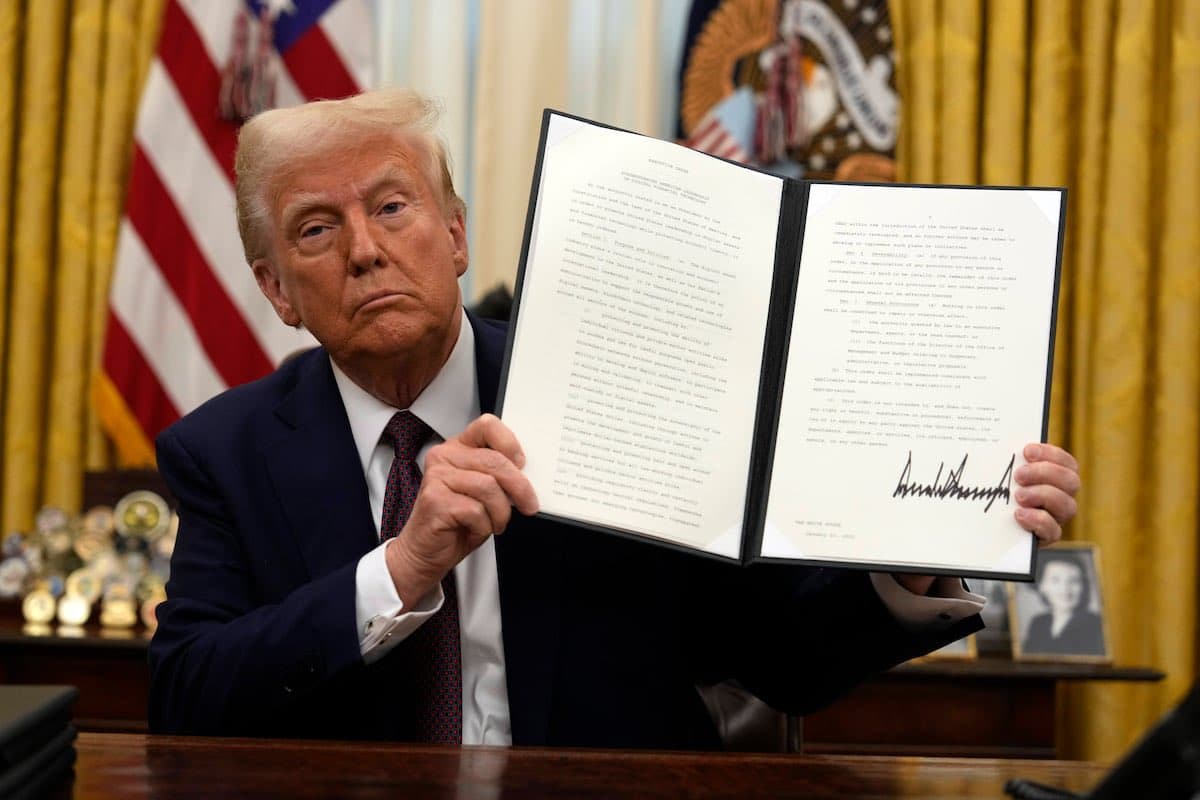
Trump's complete Iran deal: the White House says Iran will never get a nuclear weapon
The White House announced on June 17–18, 2026 that "the deal with the Islamic Republic of Iran is complete," after Trump signed a Memorandum of Understanding under the banner of "peace through strength," pledging that Iran will never obtain a nuclear weapon. Trump separately dismissed reports of a $300 million payment to Tehran as "fake news."
For LATAM retail and crypto-native traders, this matters because the announcement closes a months-long escalation cycle that dominated prediction markets, triggering the resolution of several Polymarket contracts on the conflict — and raising the risk of disputed oracle outcomes on ambiguous wording.
What happened and why it matters
According to statements attributed to the White House, the Trump–Iran deal is "complete." The signing was ratified during a dinner with French President Emmanuel Macron in France on June 17–18, 2026, ahead of a formal ceremony that had been expected in Switzerland. Iran's side, represented by President Masoud Pezeshkian, framed the pact as a "historic opportunity" to ease the country's economic crisis, with sanctions relief reportedly exchanged for nuclear concessions.
The Memorandum of Understanding reportedly contains 14 points, beginning with an immediate ceasefire. Disputed circulating drafts reference reparations figures — claims have ranged from a $300 million payment that Trump explicitly denied to far larger figures cited by critics. Trump has insisted the United States "will not put in a single dollar — $0" and warned that if Iran tries to build a bomb, it "will be bombed" by the United States. These payment and enforcement clauses are exactly the kind of ambiguity that complicates market resolution.
What prediction markets are saying about the Trump–Iran nuclear deal
Polymarket contracts tied to Iran handing over nuclear material reached an estimated all-time high near 77% probability for 2026 following Trump's announcement that delivery was secured. With the Memorandum now reported as signed, several conflict-related markets are moving toward resolution. Estimated odds (not official): markets on "Iran ceasefire holds through 2026" are likely trading in the 55%–70% range, while "Iran fully dismantles enrichment in 2026" remains more contested, plausibly 40%–55%, given enforcement uncertainty.
Scenarios and probabilities
- Base scenario: Ceasefire holds and the framework survives near-term, but full nuclear dismantlement remains partial and contested — estimated 55%.
- Bull scenario: Iran verifiably transfers nuclear material, sanctions ease, oil risk premium fades and the deal sticks — estimated 25%.
- Bear scenario: Third-party violations (e.g., reported strikes in Lebanon within 24 hours of signing) unravel the ceasefire and reopen the conflict — estimated 20%.
Impact on prediction markets and oil
A credible peace framework typically compresses the oil risk premium, pressuring crude prices lower as supply-disruption fears ease — a key reason traders watch this deal beyond geopolitics. On prediction platforms, the main risk is interpretive: contracts written on vague language ("deal complete," "never a nuclear weapon," "$300M paid") can produce disputed resolutions when official text, signing dates, and payment facts are contested. Separate the verifiable fact (a signing event was announced) from interpretation (whether every clause is honored).
Risks and what would invalidate this thesis
- Third-party actors breaking the ceasefire — reported strikes near Lebanon within a day of signing could collapse the framework.
- Disputed Polymarket oracle resolutions if the official Memorandum text differs from circulating drafts on payments and enforcement.
- Reversal or non-implementation: a signed Memorandum of Understanding is not a binding treaty, and either side could walk back commitments.
FAQ
Is the Trump–Iran deal actually complete? The White House announced the deal is complete and that a Memorandum of Understanding was signed around June 17–18, 2026, but it is a framework, not a ratified treaty.
Did the United States pay Iran $300 million? Trump denied any payment, calling the $300 million report "fake news" and saying the U.S. will contribute "$0." The exact figures in the official text remain contested.
How does this affect prediction markets? It triggers resolution of several Iran-conflict contracts on Polymarket, with estimated odds near 77% earlier for nuclear-material handover, but ambiguous wording raises the risk of disputed outcomes.
Sources
Track markets like this in real time on Predik.